[First Successful Funding Campaign] 3 Product Differentiation Strategies from FineDigital That Highlighted "Differences" Instead of Just Explaining Features


What if you could simply plug a device into your car’s USB port and enjoy everything from YouTube to navigation and music right on your car’s screen? FineDigital unveiled the “FineDrive Cinema,” which offers these features, and attracted 1,735 subscribers, raising 52.52 million won in its first funding campaign! Let’s take a look at the three funding strategies FineDigital used to get customers to make purchases for a product they’d never seen before.
FineDrive Cinema’sFirst Funding Results
Automotive · Electronics | Funding Ended | Funding Page as of November 26, 2026
Will my project receive funding? It’s okay if you don’t have a finished product or a business registration certificate yet. Answer six questions to find out in just three minutes if you’re ready to start your funding campaign now. |
1. They Highlighted the Differences from Existing Products at a Glance
On the product details page, FineDigital began by highlighting the everyday inconveniences experienced by customers using CarPlay and Android Auto. After introducing each issue, they demonstrated how the product allows users to run navigation and music apps simultaneously or control the screen directly from the passenger seat. Rather than explaining unfamiliar technology, they intuitively conveyed how using the product would change daily life.
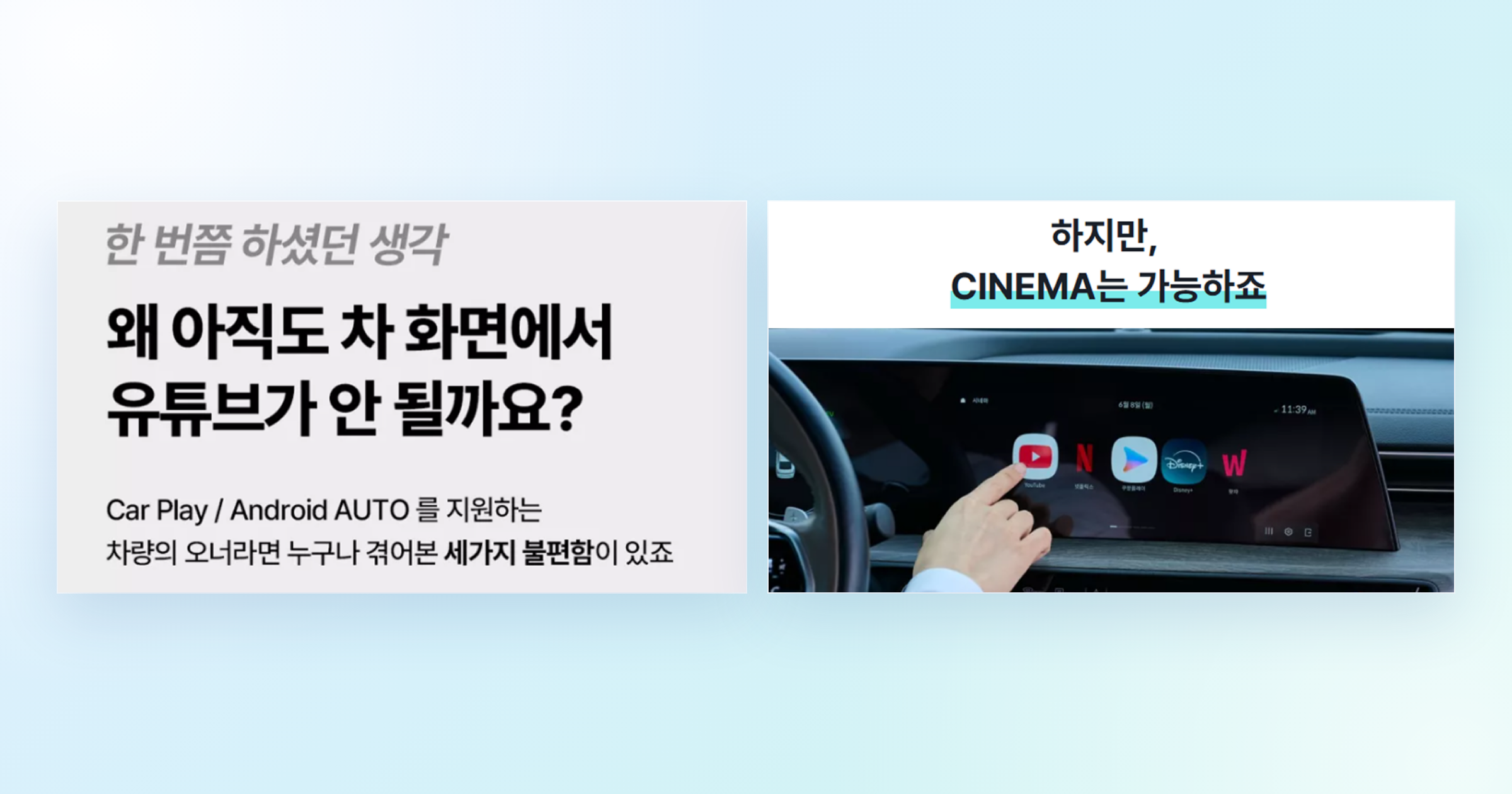
After highlighting the inconveniences, they directly addressed potential customer objections using speech bubbles. “Wouldn’t a dongle in the 100,000 won range suffice?” They responded with the analogy: “If a dongle is a mirror, then CINEMA is a smart TV.” Next, they included a table comparing wireless dongles, tablet stands, and CINEMA side-by-side across nine categories. By presenting existing products that customers might compare it to, we clearly highlighted the product’s unique selling points.
Comparison Chart on the Product Page: Dongle vs. Tablet Stand vs. CINEMA
※ I’ve transcribed the comparison table from the Findrive Cinema product page. These are the criteria provided by the maker.
2. We used reviews from test groups categorized by customer type to encourage purchases
Fine Digital didn’t release all the tester reviews at once. From the period when the product was launching soon until just before the funding campaign ended, they published a total of six tester reviews as News. What’s particularly noteworthy is that that each review featured the different situations and usage experiences.
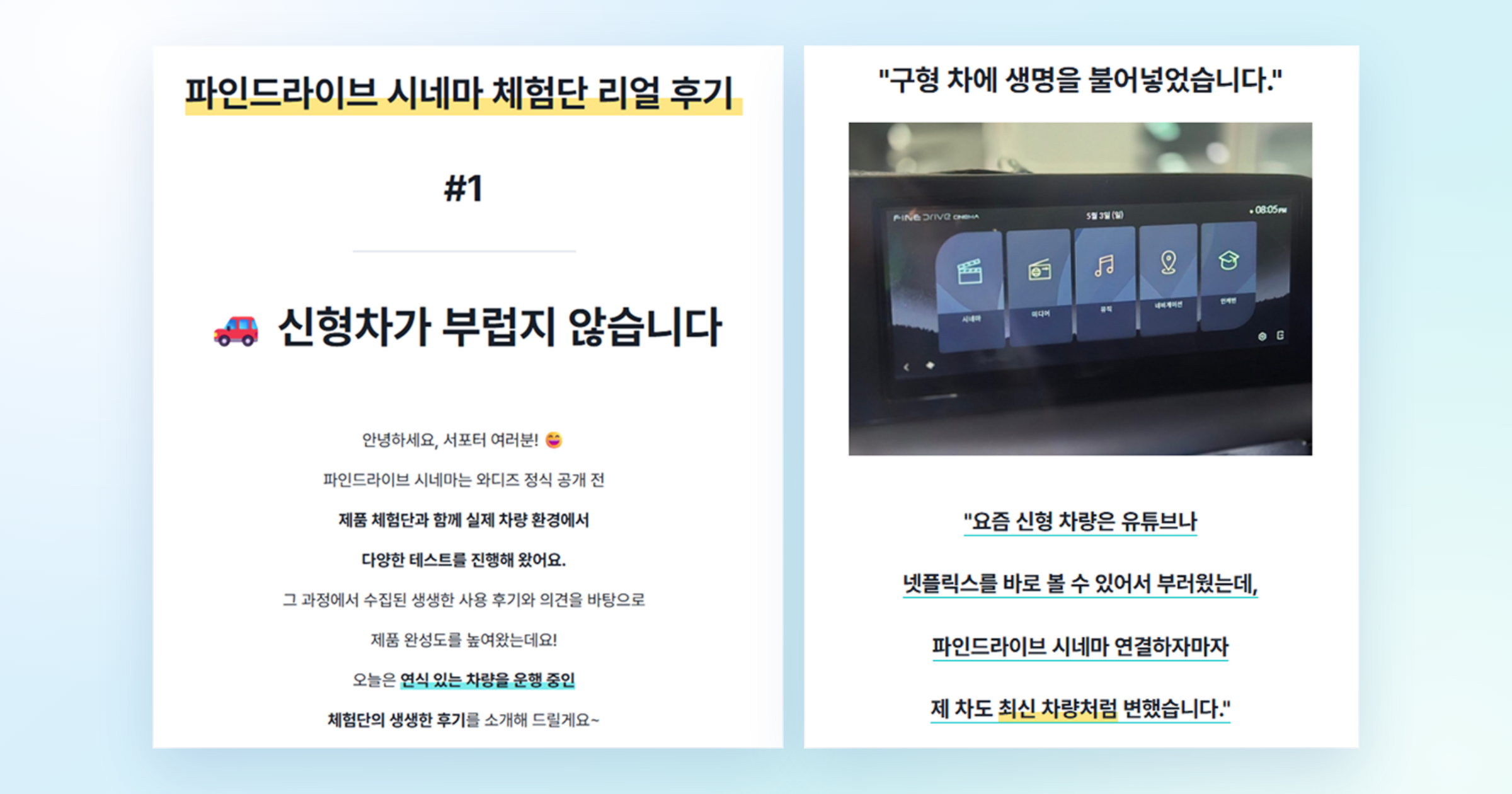
Rather than simply listing positive reviews, they showed what inconveniences each customer had experienced and how things changed after using the product. By organizing reviews by customer type in this way, customers can examine the experiences of users in similar situations. This allows them to concretely imagine how the product could benefit them, even without trying it out firsthand.
3. “Will this work in my car?” We compiled frequently asked questions from comments into the News section of the FAQ
Since this is an in-car electronic device, verifying compatibility with one’s own vehicle is essential. In fact, nearly half of the comments on the project were questions about compatibility with specific car models. Fine Digital compiled these questions and published a News posttitled “Comprehensive Summary of Comment Questions! We Answer Them in the FAQ.”
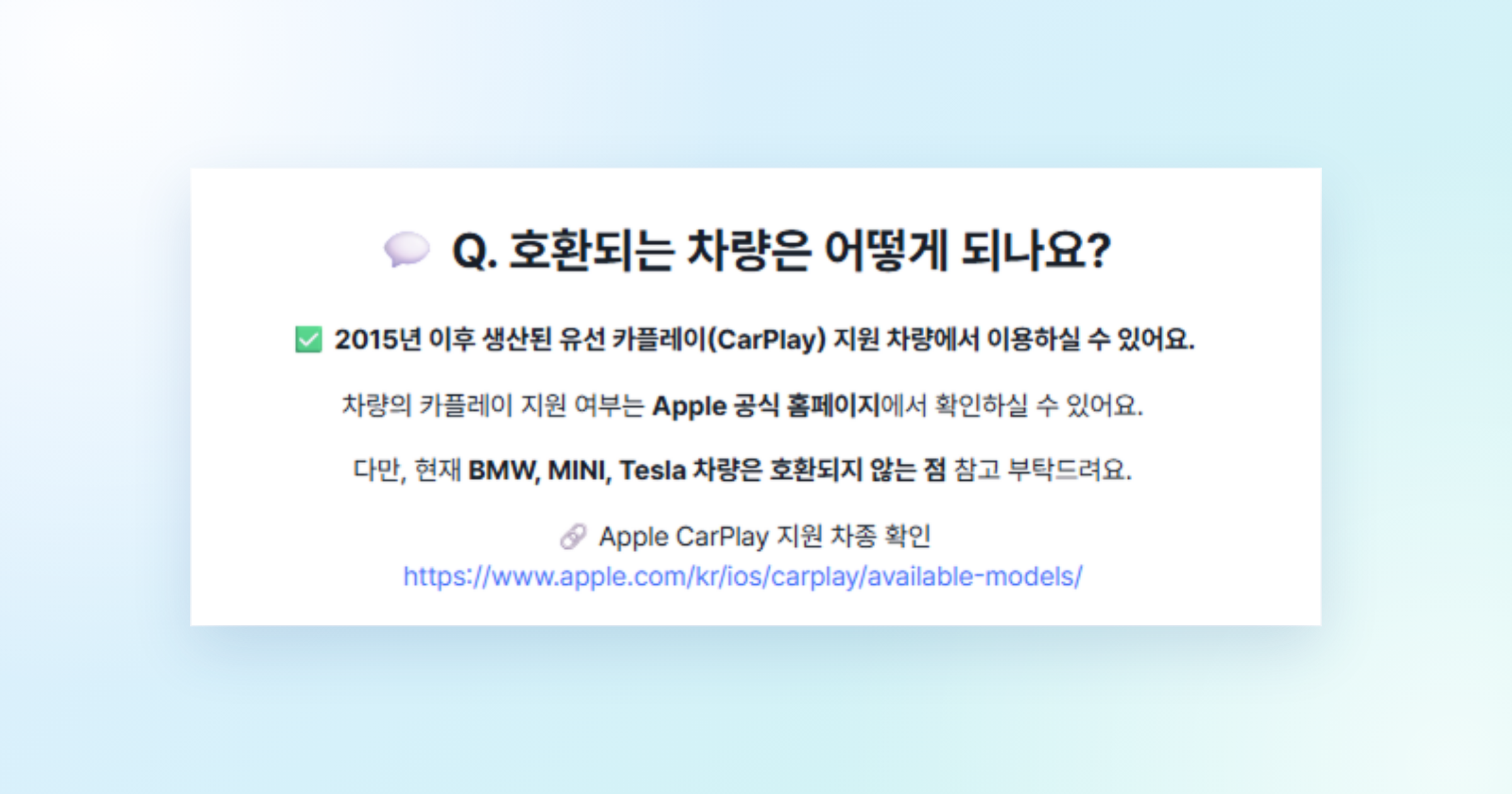
Since there were many inquiries about which apps would be available as the products launch soon, we provided a separate News post listing compatible apps. Recurring customer questions often indicate information that many customers want to verify before making a purchase. FineDigital didn’t stop at answering individual inquiries; but compiled them into a News post accessible to everyone, thereby reducing customers’ hesitation about making a purchase.
If I were to apply this to my first project? If it’s a product customers are seeing for the first time, start by organizing the information they’re most likely to be curious about.
You can find out how to use News and notifications during the period launching soon in the Launching Soon Guide. |
How FineDrive Cinema Utilized Funding
Starting from the period when FineDigital is launching soon, FineDigital used News posts to share reviews from testers, product information, and early-bird benefits. As a result, they gathered 1,735 notification subscribers and reached 369% of their funding goal within just one hour of the campaign launch. Even after the campaign launched, they maintained consistent communication with customers through reviews and FAQs, selling out all 200 limited-edition Ultra Early Bird Rewards. The maker explained why they chose to debut on wadiz as follows:
The reason we’re unveiling the Findrive Cinema on wadiz first is that we want to confirm the product’s direction and value together with you—those interested in new technologies and products—through your comments.
— Maker Introduction on the Findrive Cinema Product Page
❶ A product page highlighting differences from existing products
Starting with common customer pain points, the page clearly communicated the reasons to purchase through a comparison chart with existing products.
❷ Testimonials from different customer segments
We consistently shared usage experiences from a diverse range of customers to spark interest among a wider audience.
❸ FAQ News Section Compiling Frequently Asked Questions
We compiled frequently asked questions—such as vehicle compatibility and supported apps—into a “News” section, making it easy for customers to find the information they need before purchasing.
No matter how great a product’s features are, it’s hard to convert to a purchase if customers don’t understand why they need it. If you’re preparing to launch a new product, before explaining its features, try anticipating the questions customers might have—such as what inconveniences they’re facing and what they’re curious about—and prepare your answers in advance.
It’s okay if it’s not perfect. Your project won’t go live immediately after you create it. There’s no charge just for creating a project, and you can review and edit the content until it goes live. |
How did the first-time maker get started with funding?
First Successful Funding Story [Grini] Wall-Mounted Bathroom Heater |
First Successful Funding Campaign [Doctor House] Rubber Cutting Board |
First Successful Funding Campaign [Badmalon] Komo Pet Bowls |
Frequently Asked Questions Before Your First Funding Campaign How should I write about product tester reviews when posting them as News? Try to feature one person’s situation and one specific problem they solved in each post. FindDrive Cinema introduced a different driver in each review—such as “drivers of older model cars,” “people in their 40s driving long distances with children,” and “Galaxy users who find hotspots a hassle”—and wrapped up each one with a one-line summary. If you include the setup instructions for resolving the issue mentioned in the review, it will also read like an informative article. What should I include in the FAQ and News sections? Compile frequently asked questions from comments and inquiries, and organize them in the order of “Question, Short Answer, How to Verify.” FindDrive Cinema answered eight questions—including those about compatible vehicles, power supply, boot time, and in-car video—and directed users to verify compatibility directly via a link to Apple’s supported models page. When citing numbers, it’s best to specify the conditions, such as “based on internal testing.” Can I launch a funding campaign even without a business registration certificate? Yes. As long as you verify your identity, even individuals without a business registration certificate can launch a funding campaign. If I don’t reach my funding goal, do I have to make up the shortfall? No. If the funding goal isn’t met, payments from supporters won’t be processed. There are no fees or penalties. |

Updated November 26, 2026