[100 Million Funding Club] Doodoo Story Raised 110 Million by Addressing Parents’ Parenting Concerns Through Shadow Puppet Theater
Updated: November 6, 2026
Putting a child to sleep is a small battle parents face every night. That’s why Doodoo Story promoted its shadow theater as a bedtime routine to end this “sleep war,” raising 110 million wonover 11 days. What stands out here is the project title. With phrases like “Sleep Routine → Mom and Dad Can Quit Parenting Early,” it promised not just that children would sleep well, but also that parents would regain their leisure time at night. In this 100 Million Funding Club, we’ll take a look at the four strategies Dudo Story used to encourage parents to participate in the funding campaign.
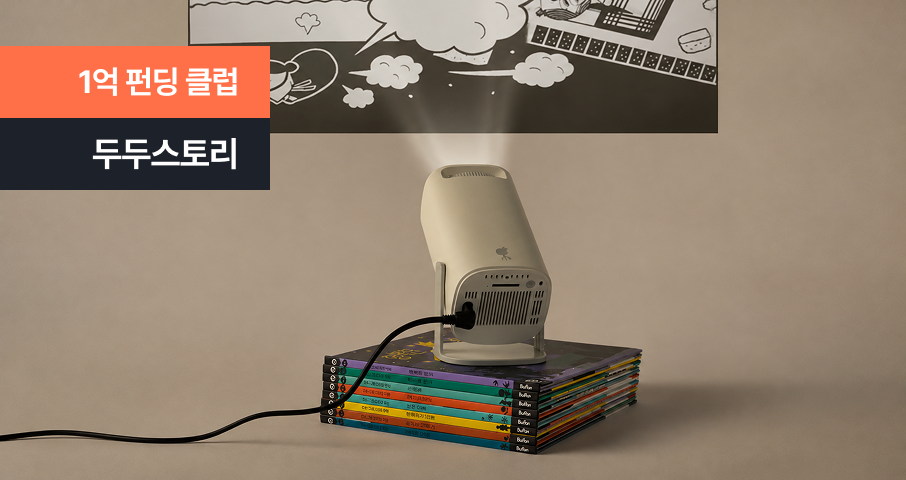
100 Million Funding Club · Dudo Story Funding Results
| Funding Period | Funding Goal | Number of Supporters | Number of Subscribers |
| October 20–31, 2026 | 111,316,100 KRW | 1,205 | 3,108 |
Reason for Success #1: Building Empathy with Scenes That Make Parents Think, “That’s Just Like Us”
Dudo Story began by highlighting the parenting struggles parents face every day at the top of the project page. Starting with the project title—“Sleep Routine → Mom and Dad Can Go to Bed Early, No Problem”—they used expressions familiar to parents. Even in News posted just before the deadline, they presented a checklist of common situations parents face when putting their children to sleep, eliciting empathy. By presenting everyday situations customers face in familiar language, the campaign naturally conveyed why the product was needed.

If you’re applying this to your project? Instead of focusing on “what” your product is, start your first sentence by describing “how it changes a specific moment in your customers’ lives.”
|
Reason for Success #2: Recommendations Tailored to the Baby’s Age Make Choosing Easy
Doodoo Story unveiled a total of three product lines: Moving, Baby, and the limited-edition Miffy Baby. With so many options, customers were likely to wonder, “So, which one is right for my child?” In response, Doodoo Story published a News update one week before launch guidance on how to choose based on the child’s age in months and intended use. They also encouraged customers to leave questions in the comments if they were still unsure. Rather than simply introducing products, they helped customers choose the right product for their child.
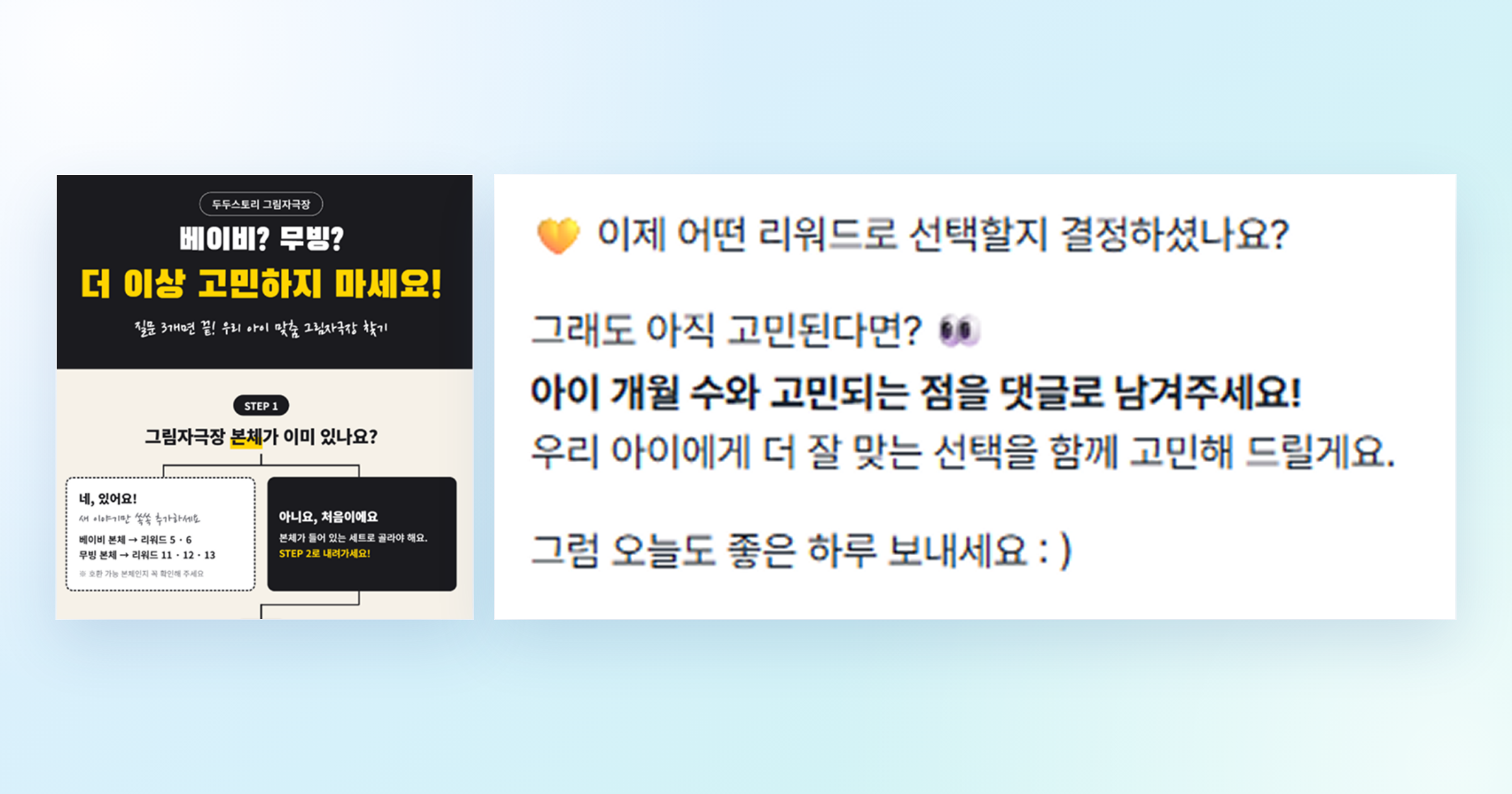
If you’re applying this to your project? Provide specific selection criteria so customers can easily choose the Rewards that suit them.
|
Reason for Success #3: Encouraging Existing Customers to Engage Again
Existing Shadow Theater customers also showed interest in the news about the limited-edition Miffy set. We received numerous requests from customers who already owned the main unit and wanted to purchase just the Miffy expansion pack separately. Reflecting these comments, Doodoo Story added a standalone Rewards option—allowing customers to purchase only the Miffy expansion pack—four days before the launch and announced it via News. By incorporating existing customers’ requests into the Rewards, we attracted more funding participants.
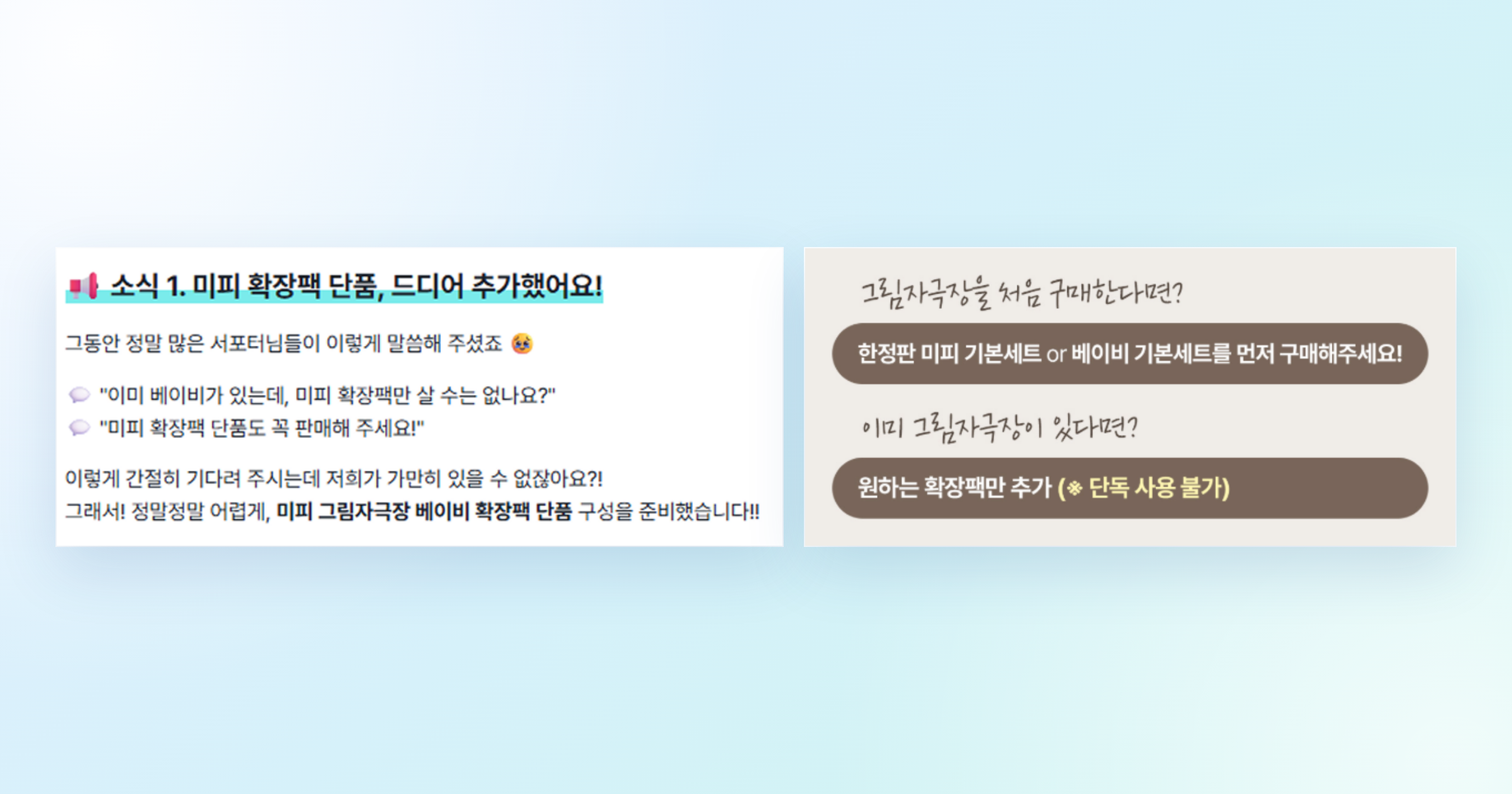
How can I apply this to my project? When launching a new product, think about what existing customers might need next and add those items to the Rewards.
|
Reason for Success #4: Encouraging Customers to Naturally Spread the Word to Others
Word-of-mouth among parents is crucial for baby products. Information shared in parenting group chats or mom communities influences product choices. During the period when Doodoo Story is launching soon, it ran a “Tell Your Parenting Buddies” event. In particular, they provided specific instructions on how to share the information, tailored to the channels parents frequently use. Supporters who participated were entered into a daily drawing to win Doodoo merchandise, and winners were announced via News every 5:00 PM. Even after the launch, they provided concrete examples of how to share news within the family, such as “Share the Pledge of support link with your husband.”
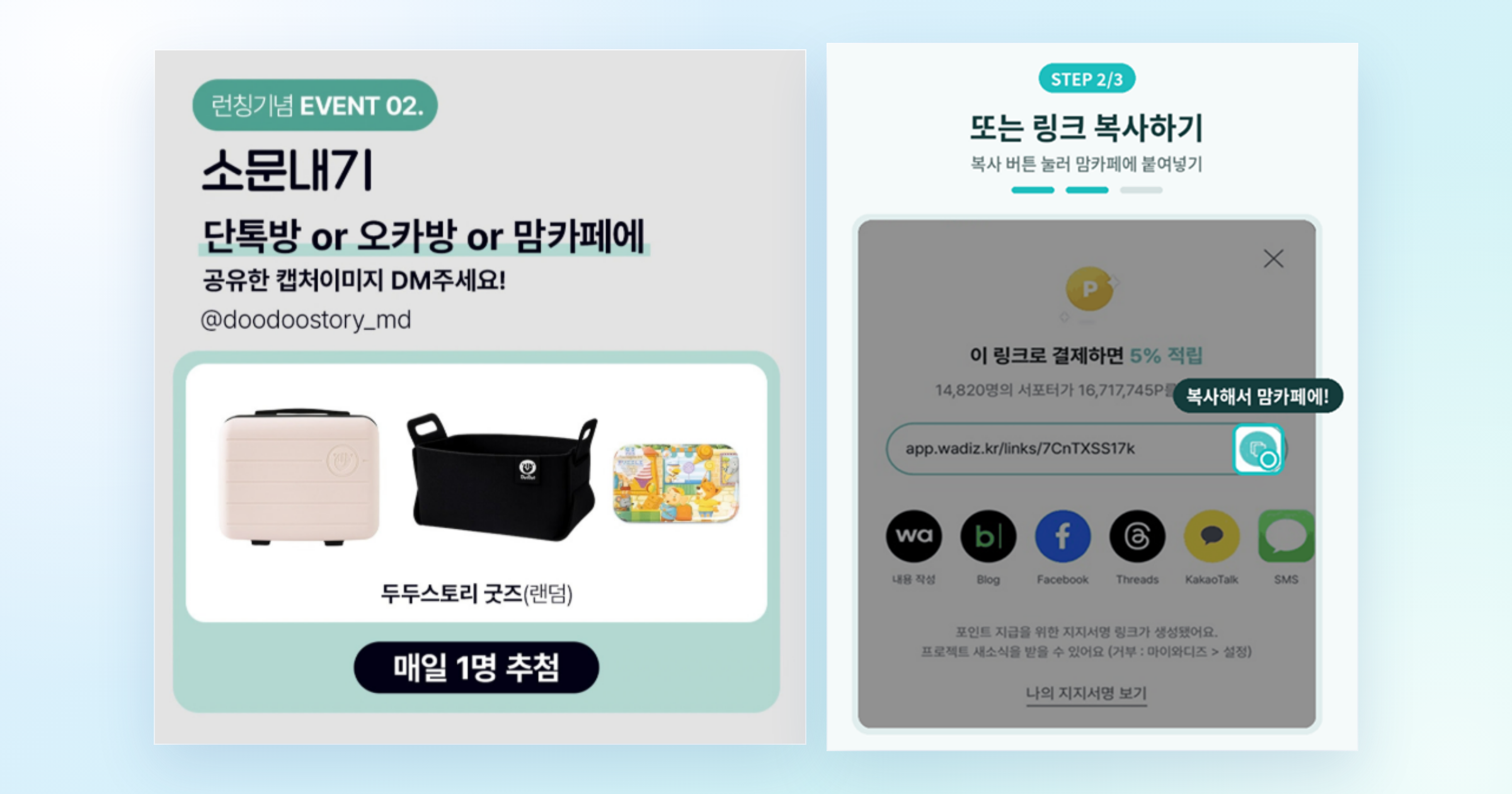
How would this apply to my project? Plan a sharing event tailored to the channels where your customers typically share information.
Pledge of supportand sharing events can be launched starting from the period before launching soon. Providing step-by-step instructions on how to participate makes it easier for supporters to follow along. |
📌 Lesson from the 100 Million Funding Club
Create reasons for customers to want to spread the word themselves
Dudo Story encouraged supporter participation by providing guidance on how to share the campaign in parenting group chats and mom communities, and by giving away merchandise through daily raffles. See if your customershave spaces where they share information with people who share similar interests. By leveraging the channels where your customers are most active, you can spread the word about your project to a wider audience through word of mouth.
wadiz TIP Start your word-of-mouth campaign as soon as you are launching soon. During the period before launching , launch a Pledge of support or word-of-mouth campaign,and provide specific details on which channels to share on, how to participate, and the benefits. The easier it is for customers to participate, the more opportunities you’ll have to reach new supporters. |
| Create My Project |
| Already in the works? Register for launching soon |
👉 Looking forward to seeing what other achievements DoodooStory will create? Follow us now
Frequently Asked Questions
How should I run a pledge of support event?
Keep the participation instructions brief—around three steps—and clearly state the participation period and the date winners will be announced from the start. Doodustory guided participants through the process in three steps: tapping the hand icon, writing a message, and entering the child’s age in months to complete. By having customers enter their child’s age in the final step, we were also able to gauge which Rewards they were considering.
If there are multiple Rewards options, how should I present them?
Narrow down the selection criteria to one or two factors and present them in a comparison chart; for customers who are still undecided, offer direct assistance via comments. Dudo Story helped customers choose between the Moving, Baby, and Miffy limited editions based on their “child’s age in months” and “intended use (sleep training vs. media replacement).” They posted the comparison chart separately in the “News” section and recommended the appropriate bundle when customers left a comment with their child’s age in months.