Wadiz Funding Detail Page Guide | The 4-Step Story Design Method Used by Successful Projects
Updated: September 9, 2026
It was confirmed by the project data that raised more than 10 million won
How to fill out the four-step funding detail page
I'm trying to make a detailed page, but I'm at a loss as I don't know what to say and how to convey it? When writing a story, there are many makers who have difficulty not knowing what to write first, not because they don't have anything to write. This is especially true when I want to show my various charms to supporters who don't know my project.
I looked at more than 10,000 projects that ended from January 2025 to August 2026 in Wadiz. In particular, I persuaded the supporters by making a story according to the four-step writing method on the detailed page for projects with good performance. In this article, let's look at the order in which the detailed pages are organized and what content must be written.
You'll find out when you read this
- Before I write a story, I have to decide what to choose
- Four questions and the order in which supporters go over the payment
- What must be written in text for AI search exposure
- Final Check Check Checklist
Before I write a story, I have to decide
two types
There are two things you need to decide in advance before creating a detailed page. If you miss this sequence, supporters may feel ambiguous about what they want to say "to whom, what," so there is a high chance that you will leave the project even if you click on it.
Target: What matters is the situation rather than age/gender
Usually, when I think of a target, I think of age and gender first. However, considering the target situation is more effective than that these days when the lifestyle varies even with the same gender and age group. For example, even for a woman in her 20s, a person who climbs early every morning and a person who delivers after working overtime chooses a completely different product.
When choosing a target, think of a situation in which a product appears. It's not a hiking boot for women in their 20s, but a hiking boot for people who were worried about Balshirim during early winter hiking. It feels like a project that can solve the inconvenience I'm experiencing right away, so I can gain more empathy and lead to a quick transition.
Key message: a sentence that will capture supporters
Write down in one sentence what product/project/service you want to introduce removes any inconvenience from supporters. This sentence becomes the head copy of the first introduction, and then the flow of the detailed page can be structured to prove this sentence.
For example, "For professional business travelers who need a neck pillow, I made a neck pillow that threw away the weight." What would you like to say to the target you caught above? If you think about it, it's easier to use. If you grab a target and a key message like this and write a detailed page, you can catch the flow of what you want to say in this story, and it helps you decide the images, videos, and GIFs to use in the story.
4 Questions Supporters Ask Before Paying
Supporters will be particularly curious about the four things below as they read the story. When you take a detailed page, it's good to organize it with the mindset that you give the best answer to this question.
|
Stage
|
What supporters are curious about
|
What I'm going to show you at this stage
|
|
1. catching one's eyes
|
What's this? | What the product is and who it's for, on the first screen |
|
2. Explaining the advantages
|
Why is it good for me? | Show your core strengths in two |
|
3. Creating Trust
|
Can I believe this? | Builders, development process, certification, and so on |
|
4. Reason for payment
|
Why now? | Rewards benefits and why you need to participate now |
Step 1. Eye catching: Show the identity of the product in the introduction
A supporter who saw the detailed page for the first time said on the first screen, "Is it a product worth seeing more?"I judge you. So in the introduction, rather than adding a lot of explanations, show me one of the strongest images and one of the key messages first. 66% of projects with high actual sales used specific numbers at the beginning of the detailed page. For example, it's a number like this.
- 130 million people around the world use it
- cumulative sales of 20 billion won
- 95 test participants (experience group)
- 1,200 hours of development
- After 3 failed attempts, it's done
Even if it's the first project that doesn't have a track record, it's okay. Like the development period, the number of tests, and the number of test participants, the number from the process of making the product can be a sufficient persuasion point. I also recommend using a GIF that can quickly show how it works or before and after use. When comparing about 10,000 projects, among the projects that were successful in funding more than 10 million won, those that used GIF were about 13%p higher than those that were not.
Please try to organize the first screen with these three!
- 1 core image or 1 GIF
- 1 line of the most important message
- one specific number
|
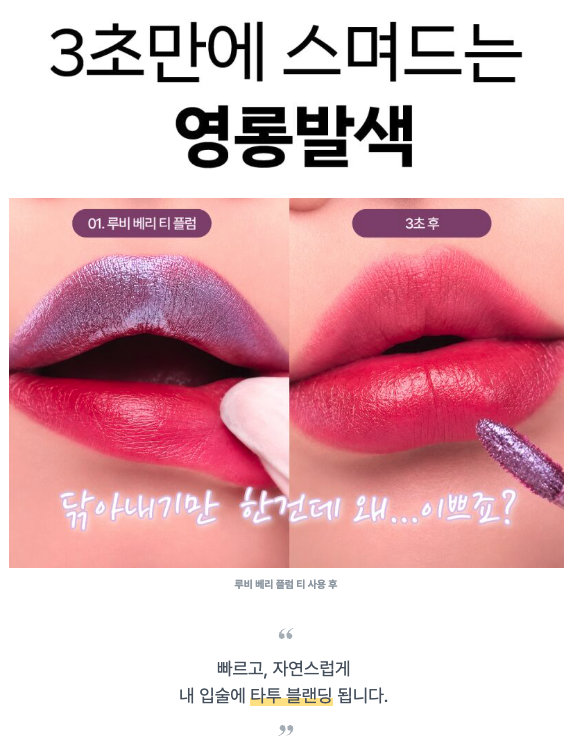
Example 1. Tissue-off lip tattoo
|
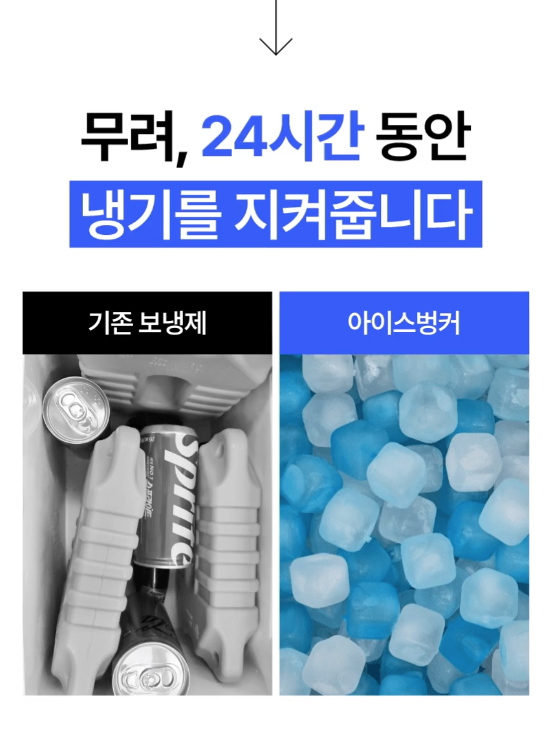
Example 2. Unmelted Ice, Ice Bunker
|
 |
 |
Step 2. Explaining the advantages: Compressing to 2 key functions
Even if there are many advantages to the product, if you explain it in the same proportion on the detailed page, the core becomes blurred. In fact, 48% of projects with high sales compressed their core strengths into two, and the composition of dividing three or more advantages into more low sales projects. If you are thinking about what advantages you will leave, answer the two questions first.
- What is the biggest reason to pay for this product?
- What is the most obvious difference compared to other products?
And when explaining the advantages, rather than simple expressions such as "like" and "convenience", please show the information that supporters can directly compare. In fact, we actively used comparison tables and data graphs on detailed pages with high sales.
| Category | a good item for comparison |
|---|---|
| an electric fan/heater | Noise, wind speed, heat generation, usage time, weight |
| Bags and backpacks | Storage space, weight, material, warranty period |
| Beauty | Before and after use, ingredient content, test results |
| Home Living | Capacity, Size, Material, Ease of Use |
| Sports and outdoor | Weight, durability, waterproof and windproof, usage environment |
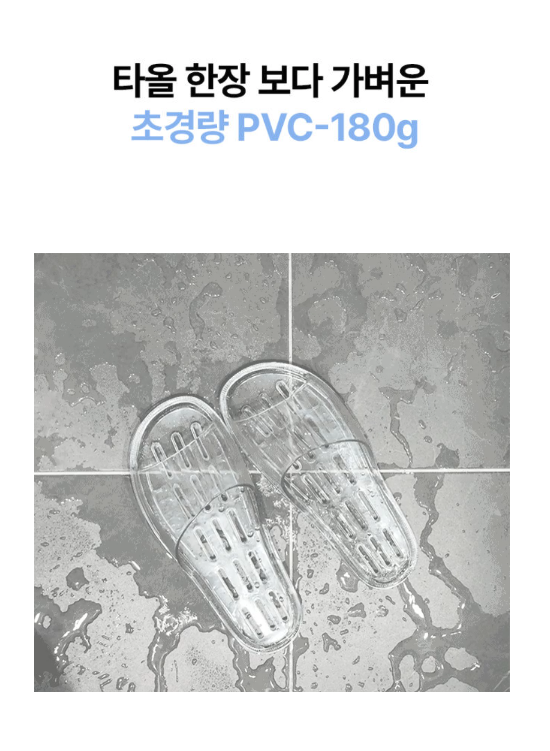
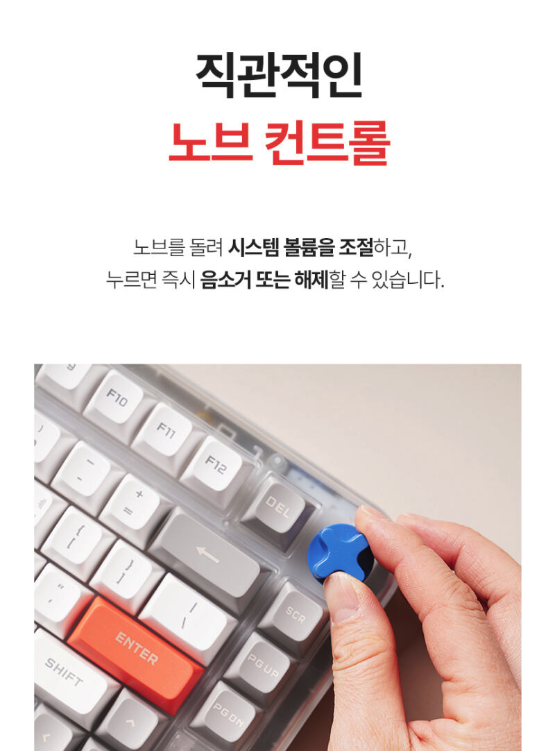
In addition, it showed information that comes to mind about actual use scenes rather than abstract expressions and practical images that can convey them visually well.
|
Example 1. Premium Antibacterial Bathroom Shoes
|
Example 2. RGB Wireless Keyboard
|
 |
 |
Step 3. Building trust: Solving supporter's curiosity
If you've fully explained the benefits of the product, the next thing you think is, "Can I trust this product?In fact, the details of the high-sales project all had sections to show their trust in the product or the maker. Think of any questions a supporter who sees my product for the first time may have, and show me enough evidence to answer those questions. There are three types of evidence.
① Product Evidence: "It actually works like this! This is how it works!"
Certificates, patents, comparison tests, self-experiments, measurement results before and after use, and test reports can be used.
- 48-hour water resistance test
- Measurement of temperature change for 10 days
- 100 repeat durability tests
However, please see how you tested it under what conditions. It's a lot easier to trust than just showing the results.
② Utilizing the review: "Other people were satisfied too!"
You can use test participants (beta tester) reviews, expert comments, photos before and after use, and interviews with real users. Wadiz Funding can also use a review of the experience group.
- Thirty women in their 20s and 30s used it for four weeks.
- Ten guardians of dogs tested it for a week.
③ Maker Story: "I made a brand and product for this reason"
Since it's your first project, if you don't have any performance or reviews, the process of making the product itself can be a basis for trust. Use the development process, sample change, failure record, start-up opportunity, and production philosophy.
- After three failed prototypes, we reduced the weight by 20%.
- After 10 years of the same inconvenience, I started making my own.
Check out the materials available for each project category.
| Category | Key Questions from Supporters | a good source of data |
|---|---|---|
| Fashion | Will it fit my body? | Wear review, photo by body type |
| Tech and home appliances | Is it safe and trustworthy? | Certification, Testing, Warranty |
| Beauty | Will it actually work? | ingredients, test results |
| Home Living | What if there's a problem while using it? | FAQs, Exchange and Warranty |
| Sports and outdoor | Can I use it for a long time? | Durability test, quality assurance |
Step 4. Reason for Payment: Tell 'Why You Need to Participate Now'
At the end of the detail page, please organize the contents below clearly so that supporters can make quick decisions.
- Rewards Configuration and Benefits
- Delivery schedule
- Frequently Asked Questions (FAQ)
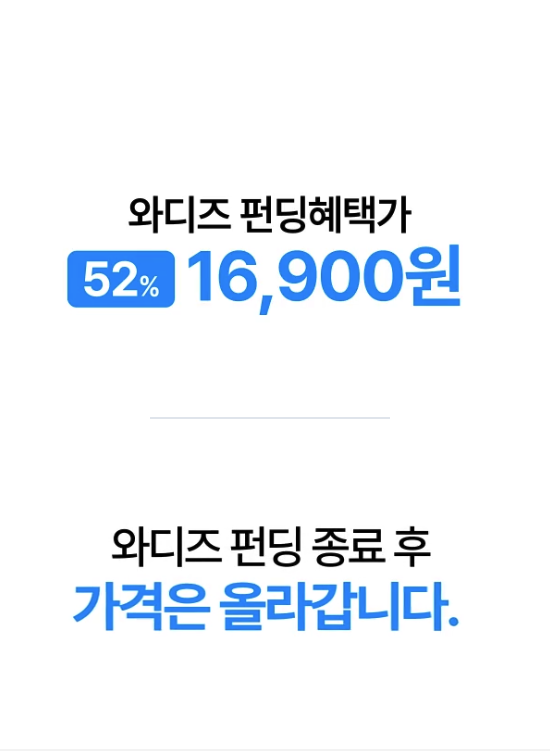
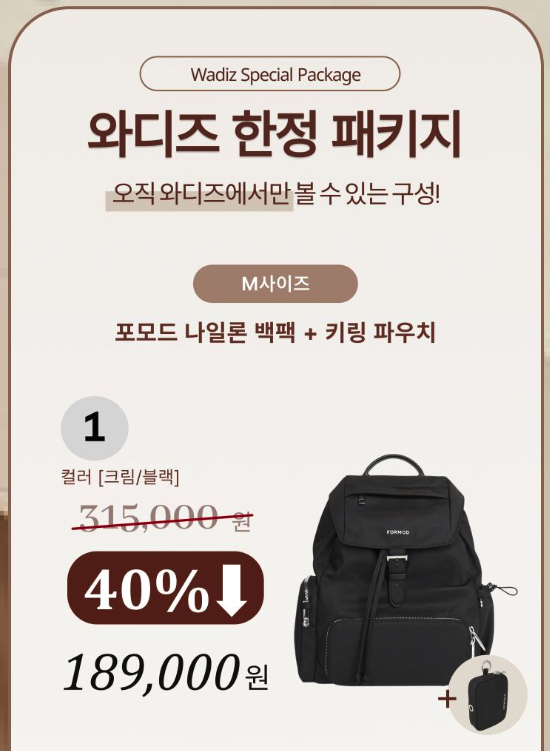
Especially when explaining rewards, it's better to show them in numbers what's advantageous if you participate now. Sixty-six percent of the actual high-sales projects explained this part in numbers.
- 36% off the list price
- 1,000 won for daily use
- Save OO won over existing monthly subscription fees
- Save 20,000 won when configuring a set rather than paying individually
|
Example 1. Parkron Mom's Puzzle Mat
|
Example 2. cannonMod Unisex Backpack
|
 |
 |
Add AI-readable writing
These days, supporters ask AI as well as search windows. "Please recommend a light neck pillow for a business trip." Something like that. At this time, AI cannot read the information on the detailed page made of images. So if you want to expose my project to AI search results, please write the below directly with the story editor and leave it as a text one more time.
|
category
|
What you want to write
|
|
Define one line with the product name
|
Write down the product name and what you do together. If you just use the brand name, it's hard to know what kind of product it is
|
|
Who's the product for
|
"He changes his neck pillow frequently because he's on a business trip"
|
|
Key Specifications
|
Write down dimensions, weight, capacity, materials, and components along with the unit
|
|
Certification and test results
|
Write down the KC certification number, the name of the testing agency, and the patent number exactly
|
|
Rewards Composition and Price
|
What's in each composition and how much it costs
|
|
When to ship
|
Please let me know when supporters can receive it
|
|
Maker Introduction
|
Write down who made it from what experience
|
Final inspection of detailed pages before funding opens
Once you have completed the detailed page, please read again to see if you are answering your supporters' questions in order.
- Eye-catching - Introducing merits - Giving trust - Did you organize it into a four-step flow of highlighting the reason for payment?
- Do you understand the core advantages of the product right away on the first screen?
- Did you compress the most important advantages to no more than two?
- Are you showing your core strengths in scenes of use, comparison tables, figures, reviews, etc?
- If it's your first project, are you showing the development process or beta testing?
- Did you explain the price and benefits in numbers at the end?
- Did you provide enough information before payment like reward composition, delivery schedule, and FAQ?
📌 If you are writing a detailed page (story), take a look at this content as well
- How to organize detailed pages and GIFs that persuade customers without video
- Going to see how to write a story introduction to be opened
- Mandatory before opening! Rewards Design Checklist
What if you're not a maker yet? Making My Project
Frequently Asked Questions
Q. Is the longer the story, the better?
It doesn't have to be long. Rather than increasing the amount, please check first whether the essential information described in Chapter 3 is missing, such as the product name, core specifications, certification, and reward composition.
Q. Where should I show the product for the first time on the detailed page?
It's good to show it at the beginning. If you save the product and show it for the first time in the middle, you can leave before the supporter knows what the product is. It is not too late to solve the brand story and long development background in the third stage of trust-making.
Q. Where should I put the development story?
Please put it in the third step, creating trust. If you explain the background of the development in a long way from the introduction, supporters will hear the maker's story first before they know what the product is. However, if the creator's experience itself is a strength of the product, you can show it in one line on the title or first screen.
Q. Can I copy the story of the last project?
You can use actual reviews of products such as images that were well received. However, please make sure to change the closing phrase, remaining quantity, and date of the last project to suit this project. If the composition or specification of the product has changed, the corresponding contents should also be modified.
Q. Can I write the story in the same order?
The story scheduled to open has a different purpose. If this funding story helps with payment, the story scheduled to be opened serves as a notification application. Therefore, even if you introduce the same product, the first screen and the order of showing the benefits should be different.