The Complete Guide to Designing Rewards | 3 Rewards Structures That Will Skyrocket Your Sales
Updated: September 9, 2026
Understanding Reward and Early Bird Structure Based on Data from Projects That Raised Over 10 Million Won
How to Structure Rewards and Early Bird Offers Based on Data from Projects That Raised Over 10 Million Won
Don’t Forget These Essentials!
- Rewards can be structured as early bird offers, sets with options, or packages of N items.
- In this case, offering 6–8options plus at least one high-value Reward priced at 150,000 won or moreincreases the likelihood of reaching 10 million won.
- If you’re unsure how to design your Rewards, refer to the [Data-Driven Reward Structure Examples] and design them based on data from successful projects!
Set Up Your Rewards in Just 5 Minutes
👇 At the bottom of the article Download the guide fileto and design Rewards options for your projectfor your project
It’s important to offer a variety ofRewards so thatsupporters can easily find the optionsthey want. In fact, have a success rate of 88%, which is 23 percentage points higher higher than projects with three or fewer. Now, let’s take a look at how projects that raised over 10 million won structured their Rewards to make them appealing, and I’ll show you how to apply these success metrics to your own project using data-driven examples!
3 Ways Successful Projects Structure Their Rewards
An analysis of successful wadiz projects revealed that they offered an average of 6 to 8 rewards. The key here isn’t simply increasing the number. The key is to structure the rewards so that supporters can easily choose options that fit their budget and purchasing goalsis the key.
|
How to Create
|
Here’s how to create it
|
|
1. Early Bird Type
|
A structure that divides the main Rewards into Ultra, Super, and Standard Early Bird tiers, with tier-specific gifts and limited quantities
|
|
2. Option-Based Set Type
|
A structure that combines main and secondary rewards, offering different benefits based on the combination
|
|
3. N-PackageType
|
A structure where the same Rewards are bundled in quantities of 2, 4, 6, etc., with benefits varying by quantity
|
|
+) Limited Edition Options
|
Add options available exclusively through this project, such as wadiz-exclusive colors and limited editions
|
Among these, the method most frequently used by successful projects is creating early-bird packages. Even if you don’t have many flagship products, you can create a variety of options by offering early-bird benefits or varying the quantities and product combinations
The price range that generated the most revenue was 70,000–150,000 won
For successful projects that achieved over 10 million won in sales, generated the most revenue in the 70,000–150,000 won range, and when combined with the 150,000–300,000 won range, these price points accounted for approximately 58% of total sales.
|
Rewards Price Range
|
Percentage of Sales from Successful Projects
|
|
1,000–30,000 won
|
3%
|
|
30,000–70,000 won
|
20%
|
|
70,000–150,000 won
|
32% (maximum)
|
|
150,000–300,000 won
|
26%
|
Of course, not every project needs to fit within this price range. Consider the product’s base price and category, and structure your options in stages— from low-priced Rewardsthat are easy to choose , to main Rewards, to high-priced Rewards of 150,000 won or more, which accounted for a significant share of sales.
Success Criteria for Rewards by Category
So, what are the rewards criteria for your category? *Based on data from successful projects raising 10 million won or more, we’ve compiled recommended numbers of rewards and price range guidelines for six major categories.
| Category | Number of Rewards Combinations | Low-Priced Rewards Range | Main Rewards Price Range | High-end Rewards price |
| Fashion | 7–10 items | 50,000 won | 120,000 won | 150,000 won |
| Tech & Home Appliances | 6–9 items | 70,000 won | 100,000 won | 120,000 won |
| Food | 6–9 items | 30,000 won | 90,000 won | 170,000 won |
| Home & Living | 7–10 items | 30,000 won | 70,000 won | 110,000 won |
| Beauty | 6–9 items | 30,000 won | 90,000 won | 170,000 won |
| Sports & Outdoor | 6–8 items | 40,000 won | 100,000 won | 120,000 won |
※ You can download the Excel file titled [Data-Driven Composition Examples] below to view detailed criteria for all categories, including e-books & classes, books, kids, and pets.
※ The data was analyzed based on projects that concluded between August 2025 and August 2026.
3 Rewards Structure Patterns Identified from Successful Projects
Even with just one flagship product, you can create a variety of rewards depending on how you design the quantity, combinations, and benefits. Here are the three reward package patterns used in actual successful projects: the “Early Bird,” “N-Item Package,” and “Option-Based Set” .
Pattern 1. Early Bird: Creating a Reason to Participate Now
This is the approach most commonly used by successful projects. Even for the same product, by tiering benefits—such as Ultra → Super → Standard Early Bird—you can create multiple Rewards options even with just one flagship product.
📍Case Study: Olizio Lifting Device (Funds Raised: 470 million won · 1 Type of Rewards)
|
Tier
|
Rewards
|
Price
|
Savings Compared to Regular Price
|
Actual Number of Transactions
|
| Ultra Early Bird | Main Product + Cream + 2 Gels + Sheet Mask | 490,000 won | 11% off + additional sheet mask | 1,039 reviews (overwhelming) |
| Limited-time offer | Same Set | 499,000 won | 9% off + free sheet mask | 378 orders |
| Super Early Bird | Main Product + Cream + 2 Gels | 520,000 won | 5% off | 11 items |
| Early Bird | Main Product + Cream + 1 Gel | 550,000 won | Base Price | 3 items |
💡 Key to Success
- We categorized the same product intoUltra Early Bird → Limited-Time Offer → Super Early Bird → Early Bird tiers.
- Of the 1,431 total transactions, 98.9% were concentrated in the Ultra Early Bird and Limited-Time Offer tiers.
- Although the Ultra Early Bird discount rate of 11% wasn’t particularly high, we paired it with the Super Early Bird tier (5% discount) to make it appear like a relatively larger benefit.
- We also added bonus items and limited quantities to create a compelling “reason to participate now.”
Wait a minute! What discount rate should you set for early bird offers?
Based on successful projects raising over 10 million won, the early bird benefits are as follows.
|
Tier
|
Discount Compared to List Price
|
| Early Bird | 42.1% |
| Super Early Bird | 44.2% |
| Ultra Early Bird | 45.7% |
The difference between tiers was small, at about 2–4 percentage points. Design options that include limited quantities per tier and additional components (freebies, extra options) to create a compelling reason to “join now.”
Pattern 2. Utilizing Options: Bundling Multiple Products
When there are two or more rewards ,combine them —such as A+B or B+C—to create multiple choice options.
📍Case Study 2: Black Santa Convection Heater (Funding Goal: 690 million won, 3 main Rewards)
|
Rewards
|
Price
|
Compared to the total of individual items
|
Actual Number of Transactions
|
| Small Heater (Single Unit) | 114,000 won | Based on | 1,492 listings |
| Medium-sized Heater (Single Unit) | 128,000 won | Standard | 1,433 items |
| Large Heater (Single Unit) | 148,000 won | Standard | 1,284 |
| Small + Medium Heater Set | 239,000 won | 1% down from 242,000 won | 456 listings |
| Heater Medium + Large Set | 273,000 won | 1% down from 276,000 won | 226 items |
| Large + Large Heater Set | 293,000 won | 1% down from 296,000 won | 205 items |
💡 Key to Success
- The Black Santa project created a total of six optionsby adding three set bundles to small, medium, and large individual items.
- What’s noteworthy is that the discount for the sets was just 1%. Instead of offering a large discount, they created a reason to choose two products together—such as “a small one for the kids’ room and a large one for the living room.”
- For set Rewards, it’s important to demonstrate “why this combination should be chosen together.”
Pattern 3. N-Pack: Bundling the Same Product by Quantity
For products that people have a reason to buy in multiples—such as consumables—try increasing the quantity in increments, such as 1 → 2 → 4 → 8.
📍Case Study: Capsule Olive Oil (Funding Goal: 60 million won · 1 Type of Rewards)
|
Rewards
|
Price
|
Unit Price
|
Benefits per item
|
Actual Number of Transactions
|
| 1 box (trial pack) | 23,900 won | 23,900 won | Based on | 28 |
| 2 boxes | 32,900 won | 16,450 won | 31% ↓ | 126 items |
| 4 boxes | 55,000 won | 13,750 won | 42% ↓ | 270 items (Most) |
| ★BEST 6 boxes | 82,000 won | 13,667 won | 43% ↓ | 57 orders |
| Couple's 8-Box Set | 109,000 won | 13,625 won | 43% ↓ | 89 items |
| Stock Up: 10 Boxes | 129,000 won | 12,900 won | 46% off | 81 items |
| Family Pack (12 boxes) | 145,800 won | 12,150 won | 49% ↓ | 42 orders |
| Group Buy: 20 Boxes | 209,000 won | 10,450 won | 56% ↓ | 27 items |
💡 Key to Success
- The Capsule Olive Oil Project had only one flagship product but created eight optionsby varying the quantity.
- It was designed so that as the quantity increased, the price per unit decreased, naturally encouraging customers to choose larger quantities.
- They also assigned names that evoke specific purchasing scenarios—such as “Couples,” “Stock Up,” “Family,” and “Group Buy”—making it easy for customers to determine which Rewards were right for them.
Tip) Download the attachment below and check out the [Example of Rewards Structure Based on Successful Project Data]
Wondering how to structure your rewards? Check out these reward structure examples based on data from successful projects completed over the past year.
Here’s What to Do! Rewards Design Tips for Different Situations
Scenario 1) Do your Rewards consist of just one type—a single item?
✔️ Try creating a bundle by adding related products.
- A rewards structure with few options can seem a bit bland.
- Try creating special set Rewards by adding products related to your main Reward.
- As a maker, you could also add a sub-reward that’s one of your existing products—one you’re most confident in—and that’s related to the main reward.
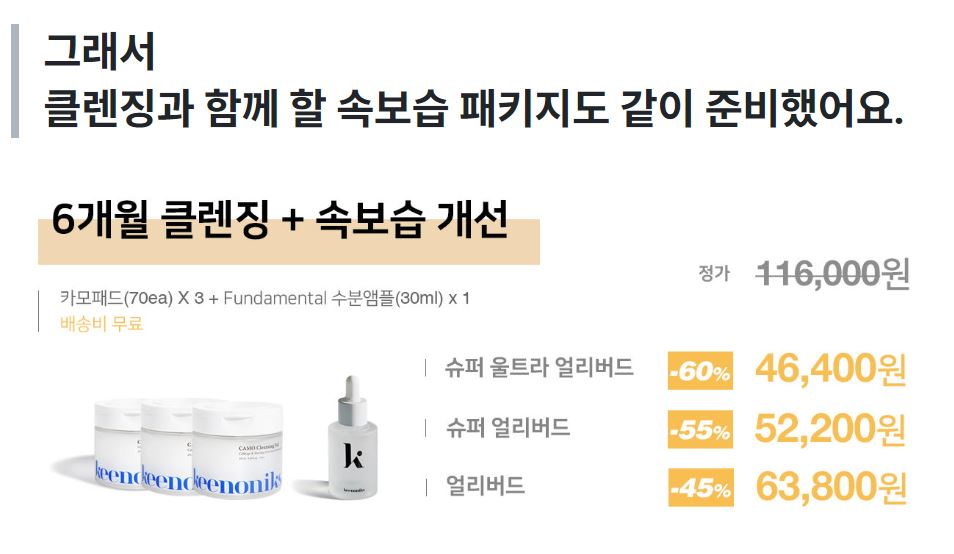
✔️ Create a “bulk set” consisting of multiple individual items.
- Show the price per item and highlight Rewards set options that offer greater savings as you purchase more.
- Supporters might even look for friends to join them during funding so they can fund attractive rewards at a lower price.
- It’s also a good idea to design the set so that it includes an additional gift.
| [Example] |
 |
✔️ Build your Rewards around related products and services.
- If the rewards are too different from one another and lack any connection, the Story’s consistency and appeal will inevitably suffer.
- This forces you to create a story with multiple themes, and a story that’s too long will cause supporters to lose interest.
- Structure the campaign so that the strengths and value of each reward are interconnected and conveyed as a single message. Selecting and focusing on specific rewards is essential.
Situation 3) Do your rewards include consumables?
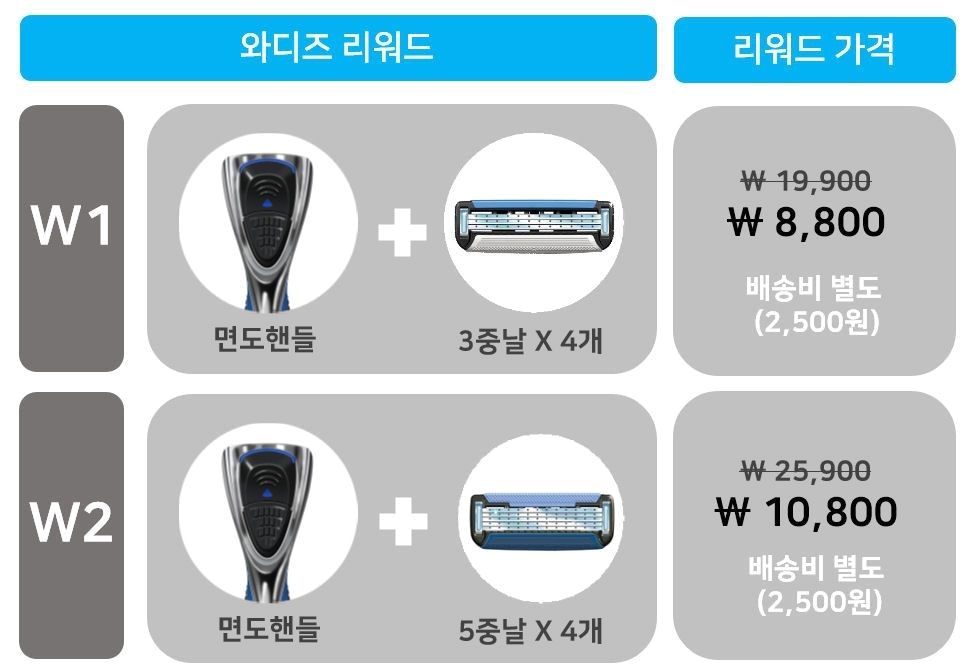
✔️ Include accessories as additional Rewards.
- From the supporter’s perspective, this is a practical option because they won’t need to purchase consumables later and can receive benefits right when they are funding the project.
- From the maker’s perspective, this is a great way to increase the average funding amount.
| [Example] |
 |
Situation 4) Are the Rewards consumables?
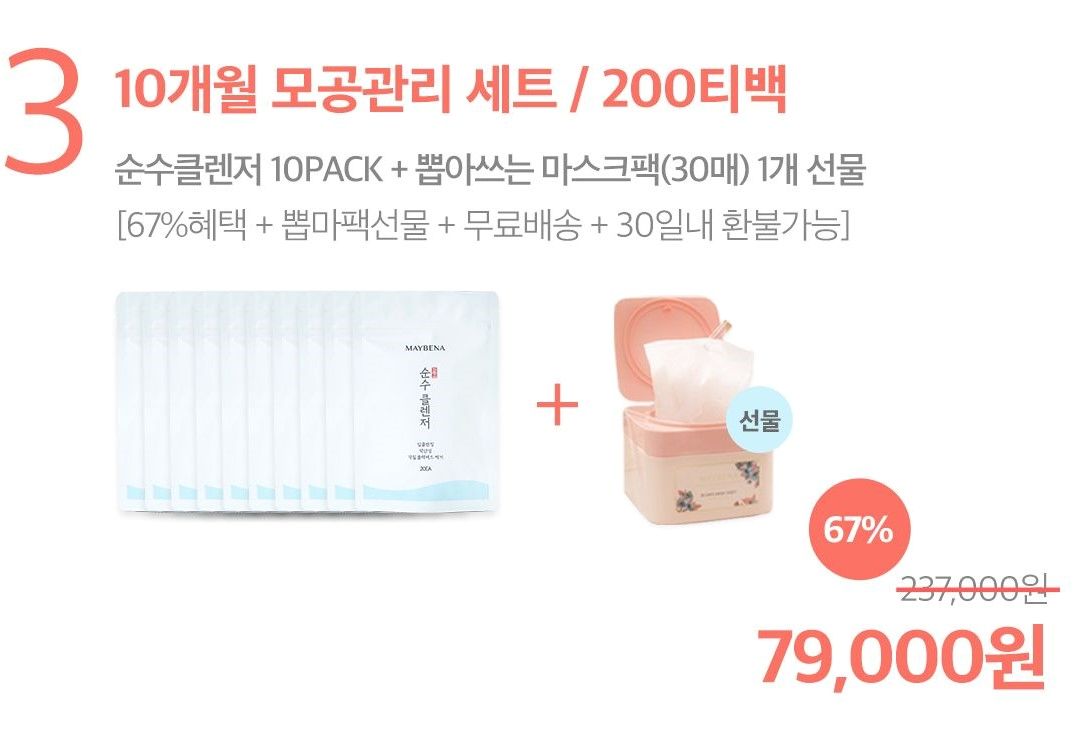
✔️ Please specify the usage period.
- It’s a good idea to include terms like “3-month pack” or “10-day package” in the name or description of the Rewards.
- This allows supporters to clearly understand how long they can use the Rewards.
- It also conveys the sense that supporters are engaging in funding not just multiple items, but the duration during which they can use the Rewards.
| [Example] |
 |
Not a maker yet? Create My Project
Frequently Asked Questions (FAQ)
Q. How many Rewards are appropriate?
A. Successful projects raising 10 million won or more typically offer 6 to 8 rewards on average. Even if you have just one flagship product, you can create six or more rewards by utilizing early bird, package, and set options. More important than the number itself is whether the rewards are arranged in a “ladder-like” structure—with low- to high-priced options centered around a “core reward” (70,000–150,000 won).
Q. What is an appropriate percentage for the early bird discount?
A. Based on successful projects, the discount rates for each tier are typically 42% for Early Bird, 44% for Super Early Bird, and 46% for Ultra Early Bird. The difference is only 2–4 percentage points, so it’s not significant. Rather than simply offering a larger discount in the earlier stages, I recommend adding an extra item to the package or setting a quantity limit like “the first N units” to create a “reason to pay now.”
Q. Can I create a variety of Rewards even if I only have one flagship product?
A. Yes, it’s possible. For consumables that sell out quickly (such as food or cosmetics), you can create tiered quantities (1, 2, 4, or 8 items). For high-priced single products (such as electronics or facial lifting devices), you can divide them into early bird tiers (Ultra, Super, Early Bird) to create 6–8 different Rewards from a single product.
Q. How should I set the discount rate for bundle Rewards?
A. This varies significantly depending on the case. The Black Santa convection heater discussed in this article succeeded in its funding campaign even though the discount was only about 1% compared to the combined price of the individual items. For sets, it’s just as important to include copy explaining “why this combination is appealing” (e.g., different sizes for each room, sets for couples, gift sets, etc.) as it is to specify the discount rate.