 RADIO BOOK
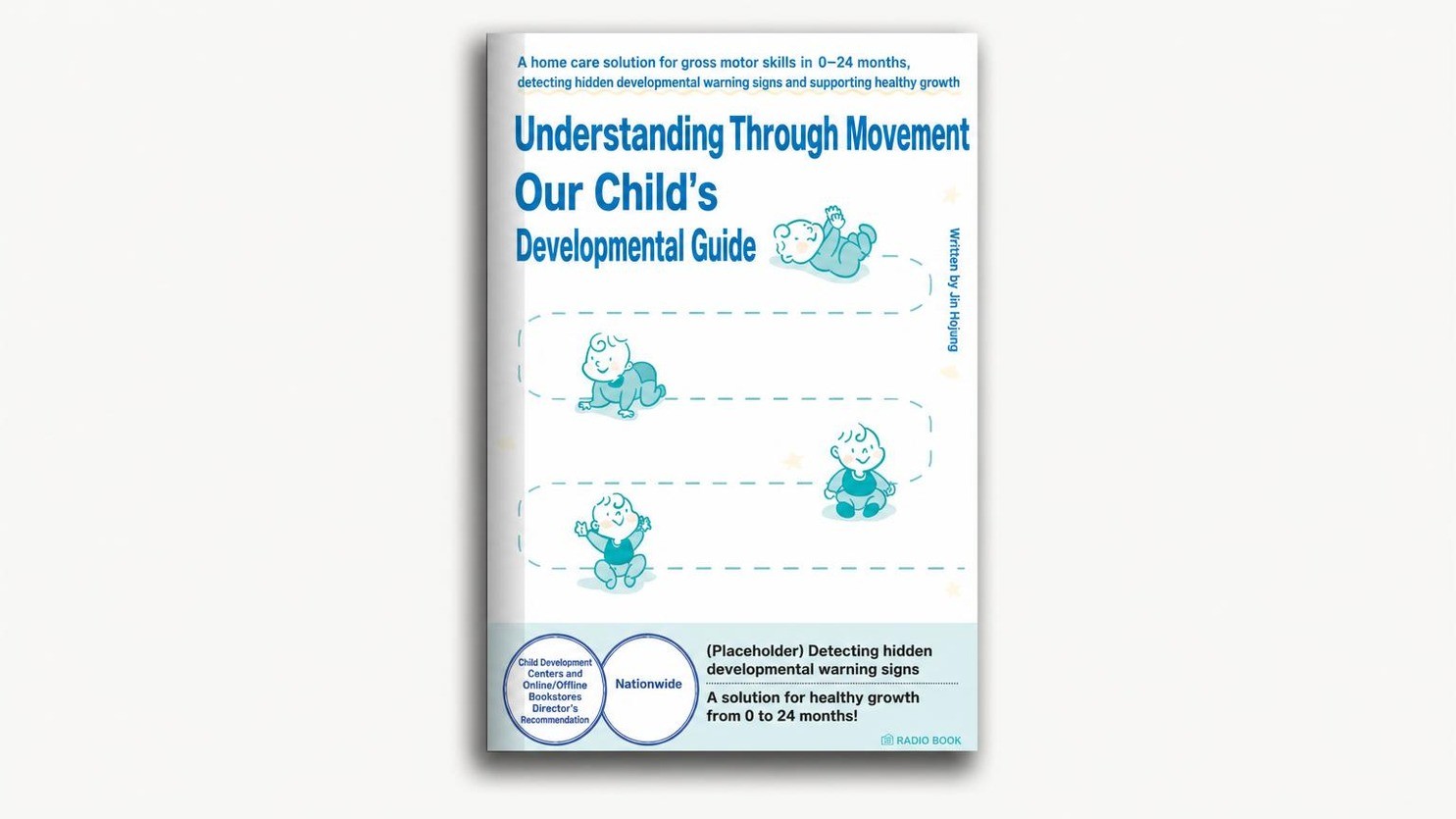
The level of play is the level of cognition,
and the level of play is the level of gross motor development.
Hello, I am Hojeong Jin, the author of <A Guide to Our Child's Development Through Movement>.

Since I was a student, I have volunteered at special schools. Over the years, I naturally transitioned from a general volunteer to a lead teacher, and thanks to my recognized passion, I even became the lead teacher representative. Volunteering at special schoolsrooms are assigned according to the developmental level of the children. I remember that the challenges faced by volunteers differed depending on the children's developmental levels.
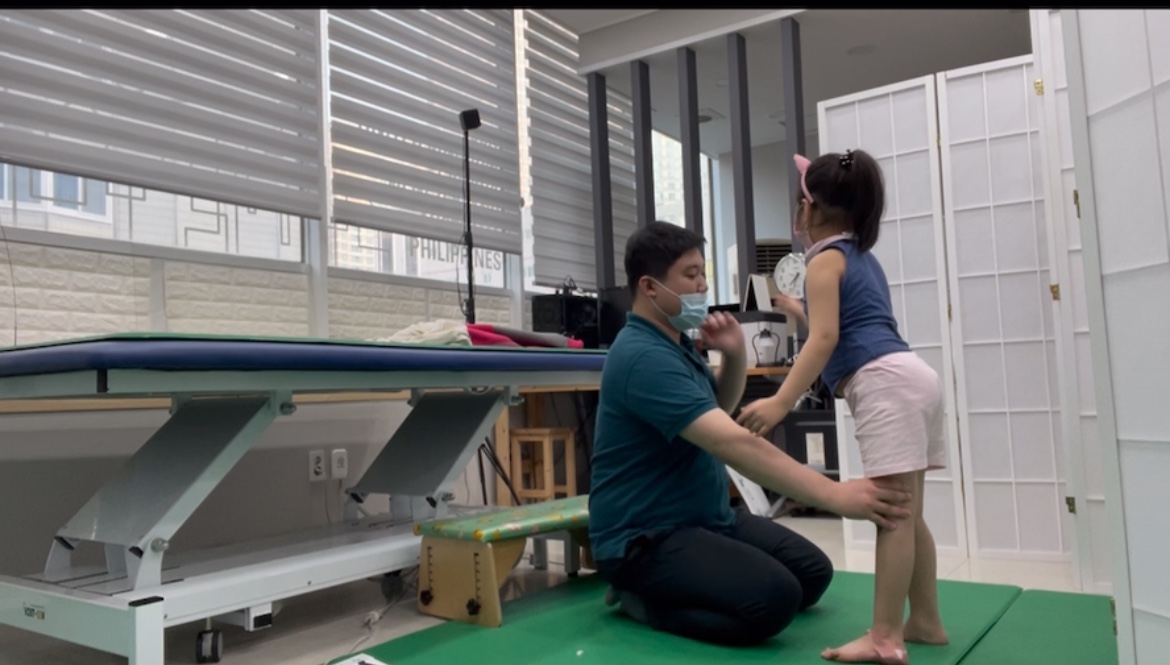
Later, I got a job at a hospital as a pediatric physical therapist.At that time, I met guardians who said, "I really hope my child can walk." and I also felt the wishes of the children,"I want to walk too." I could feel the children's wishes as well.

Those words naturally became my life goal. As a physical therapist, I attended international courses and continued my studies by giving presentations oncerebral palsy at Bobath academic organizations and university major workshops.
Eventually, I came to believe that changing a child during the infant and toddler developmental stage is the most important.
In 2022, I founded The Next Child Development Institute.
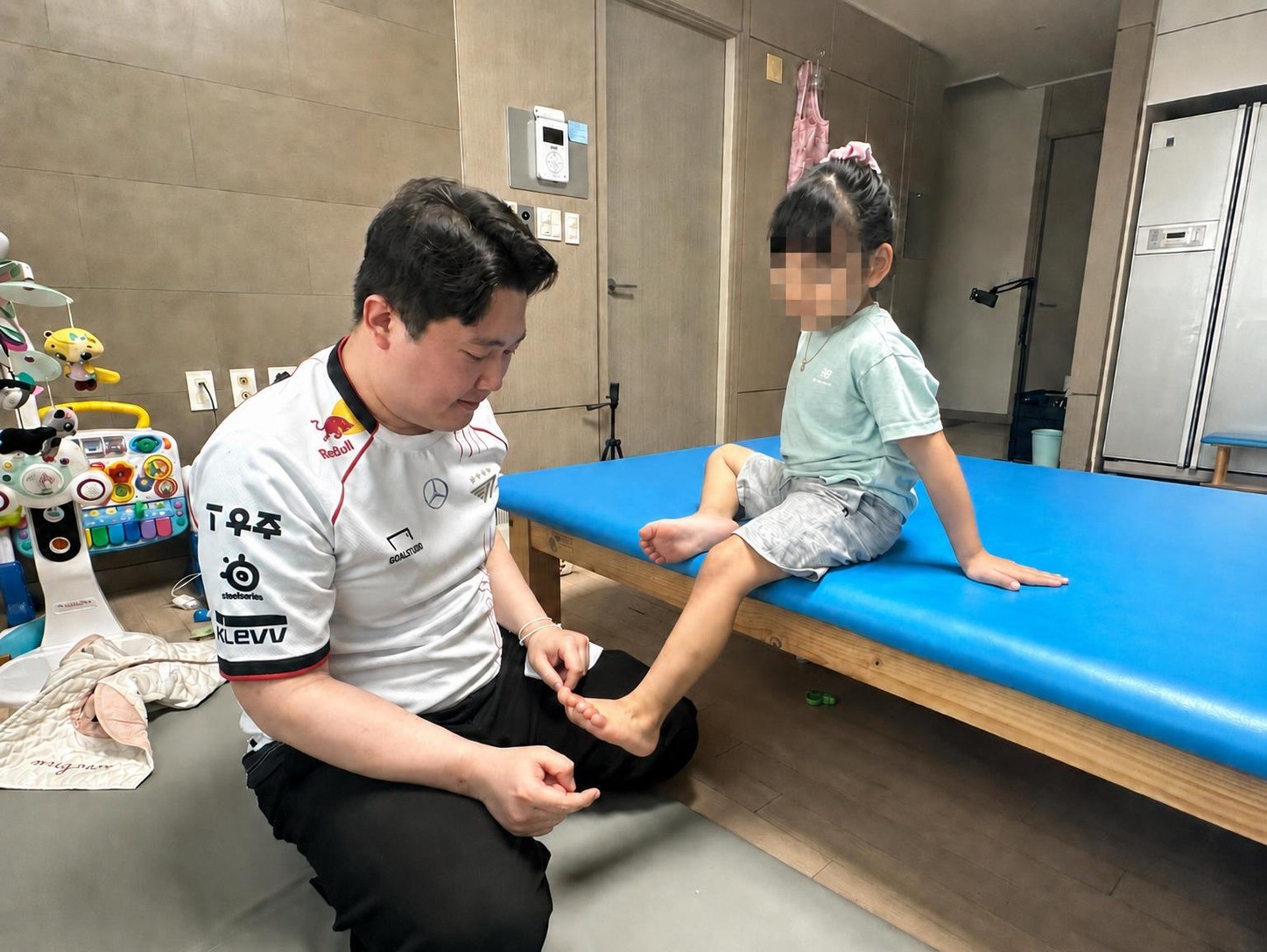
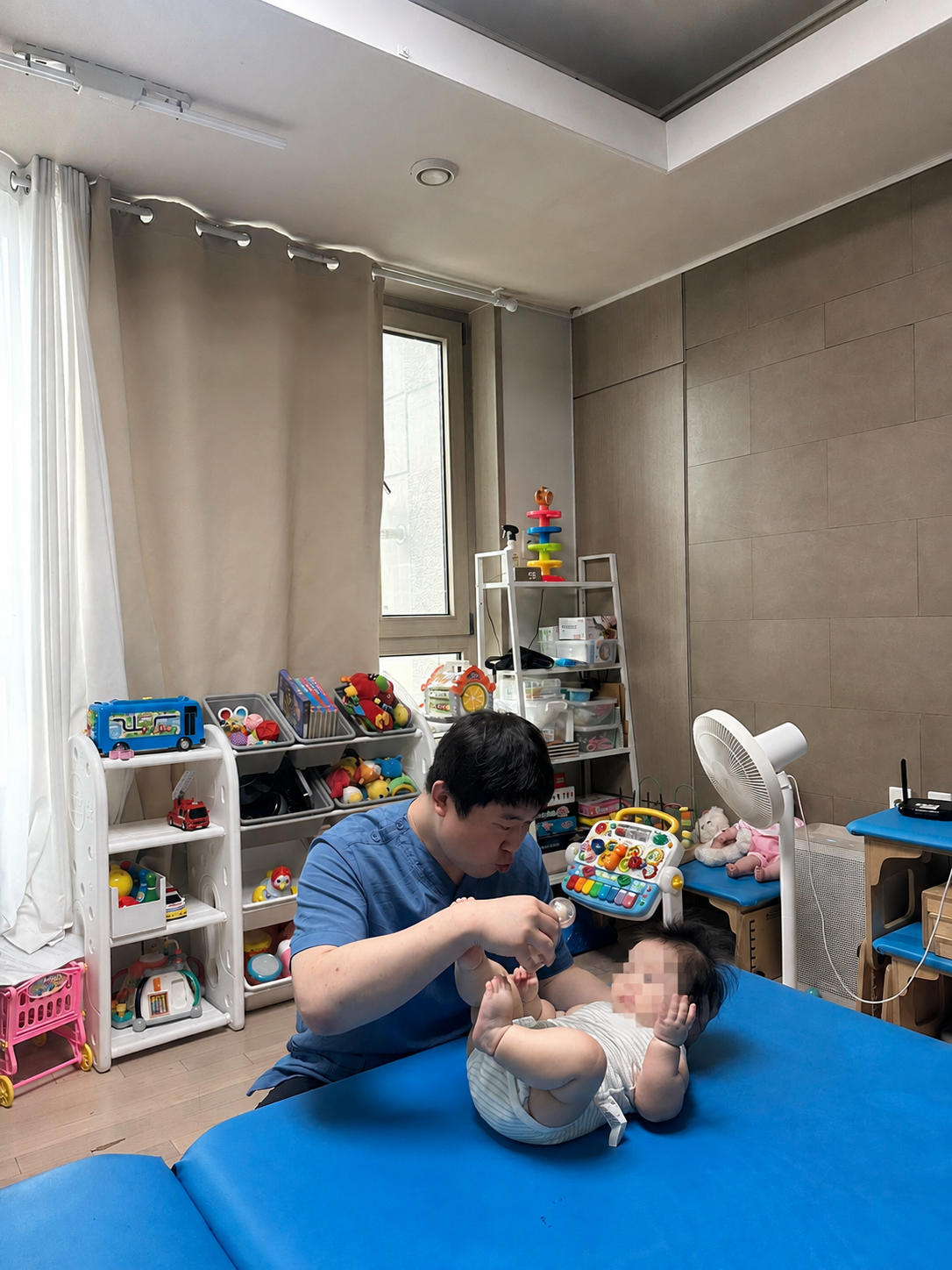
The Next Child Development Institute addressed delays in children's gross motor development through posture and movement, and reached a single conclusion.The gross motor development in the first 24 months is the child'slevel of play. and cognitive level has a significant impact.
If the head is unstable, the eyes and hands cannot be used.
Because of this, an asymmetrical head that cannot overcome gravity begins to change symmetrically within three months.
The level of play in a lying position cannot be the same as in a sitting position.
A child who could not sit without holding the floor with both hands at 5 months will, at 7 months, begin to experience a change in the level of play as both hands become free.
Crawling on all fours and independent walking cannot provide the same environmental exploration.
At 9 months, crawling on all fours involves the hands in posture control, but at 12 months, independent walking frees both hands and the ability to explore the environment begins to change.
If gross motor development is delayed,
other aspects of children's development are also automatically delayed.
This book calls the delay in gross motor development ared flag We gathered the signals and, based on those warning signs, filled it with home care methods you can do at home.Home care know-how is fully included.
This book provides readers with three main things.
1. It offers knowledge to understand children's movements.
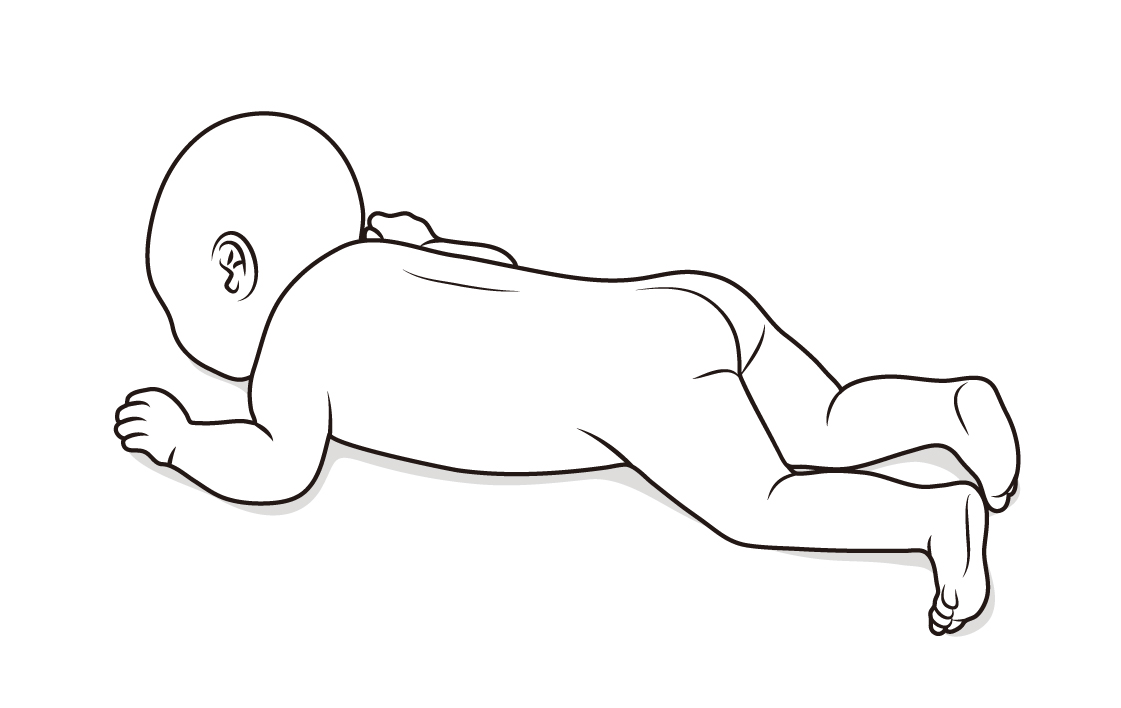
By observing this posture, you will not only recognize that the child is lying on their stomach, but also understand that the body's center is in the upper body, not the lower body.
2. It provides insights into the optimal timing for gross motor development.
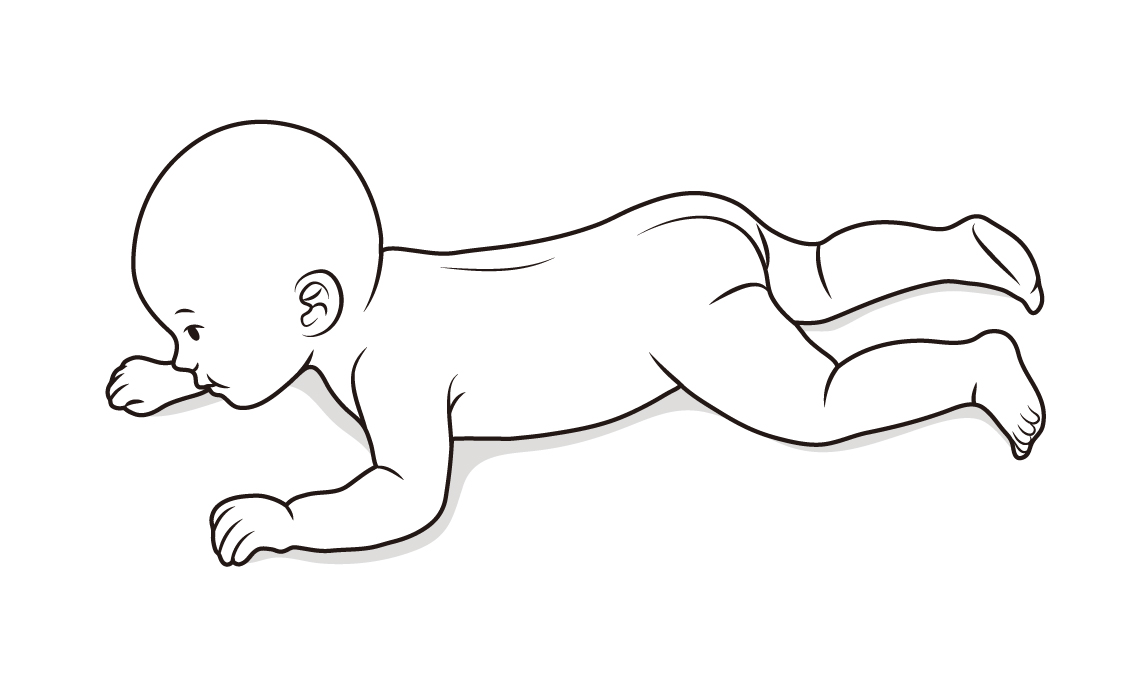
As children's vision begins to improve, their head control also gets better. At this time, their curiosity explodes and hand-eye coordination begins. If vision improves but gross motor development is delayed, hand-eye coordination will also be delayed.
3. It provides home care solutions.
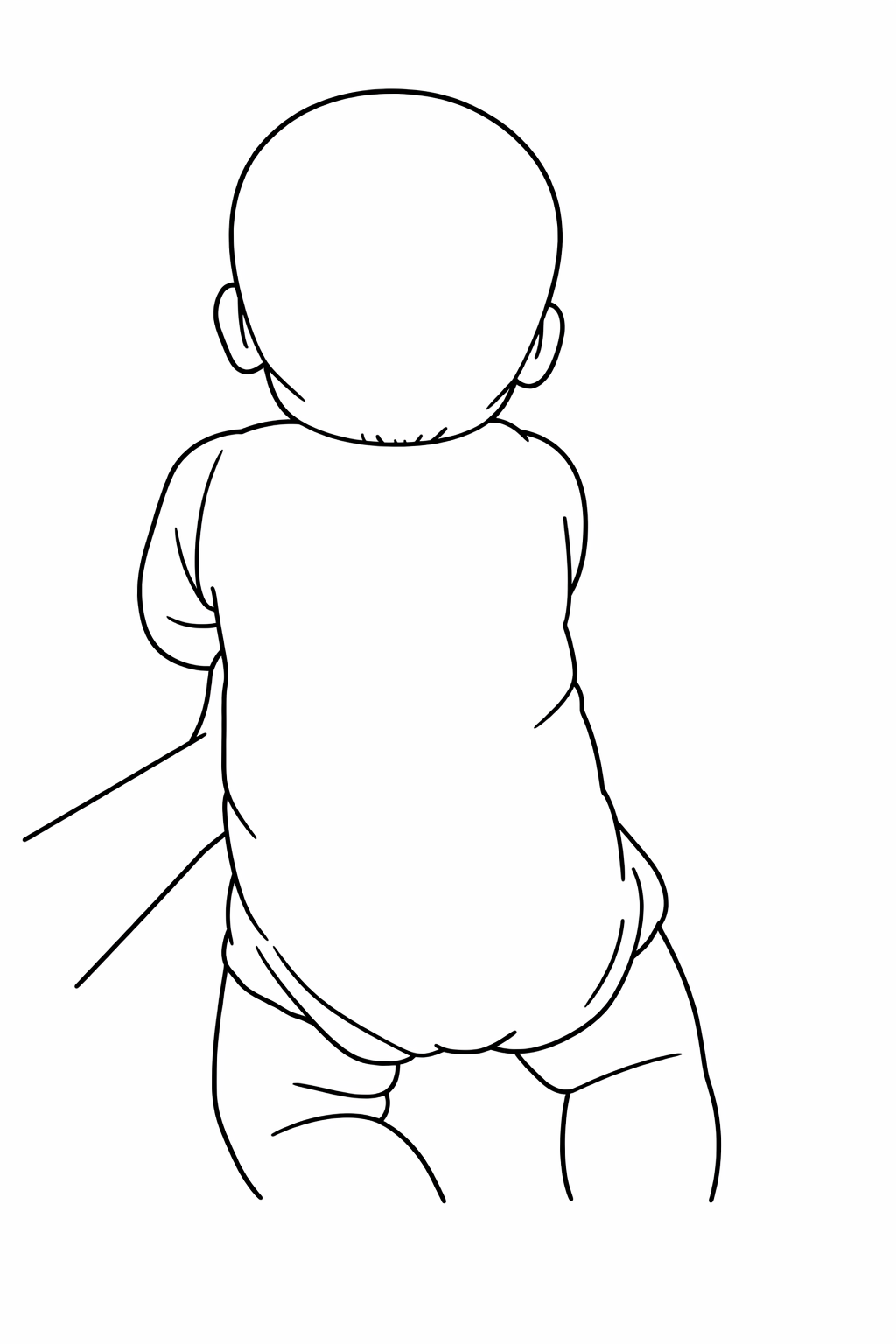
When the caregiver holds the child's ribs and lifts the upper body, the child can raise their head higher, and their posture will move in a direction that makes hand-eye coordination easier.
We hope this book helps children develop gross motor skills efficiently.
Children showing delayed gross motor development
Children expected to have delayed gross motor development
may find this very helpful, but
1. Parents curious about their child's gross motor development
Parents who want to know how head control, rolling over, sitting, crawling, standing, and walking develop
Parents who are curious if their child is developing according to their age in months
Parents who want to understand the overall flow of development, not just fragmented information from the internet
2. Parents who are a bit concerned about their child's movements
Children who move only in one direction or have asymmetrical postures
A child who is late in rolling over, sitting, crawling, or walking, causing concern.
A child who can move but seems to struggle or appear unstable in some way.
Parents who find it difficult to decide whether to visit a hospital or a developmental center.
3. Parents who want to effectively support their child's development at home.
Parents who want to help their child according to developmental principles rather than forcing training.
Parents who are curious about how to do tummy time or play with their child.
Parents who want to accurately read the movement signals their child sends.
This book is structured to be of even greater help to such parents.
Especially,
Parents of premature babies who want to understand corrected age and developmental processes.
Parents of children with torticollis or postural asymmetry.
Parents of children with developmental delays or neurological difficulties.
Parents who are raising their first child and feel unfamiliar and anxious about every movement.
Expectant parents who want to know about development from the fetal period to the first birthday while preparing for childbirth.
will surely find even greater help.
Book Structure
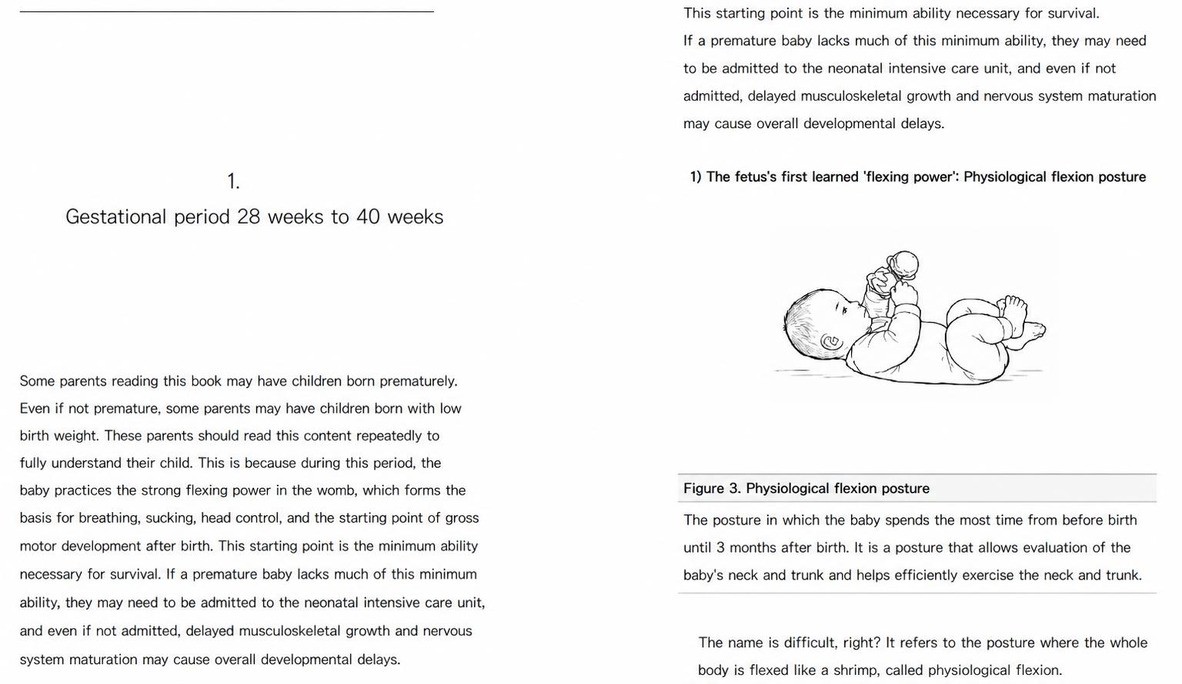
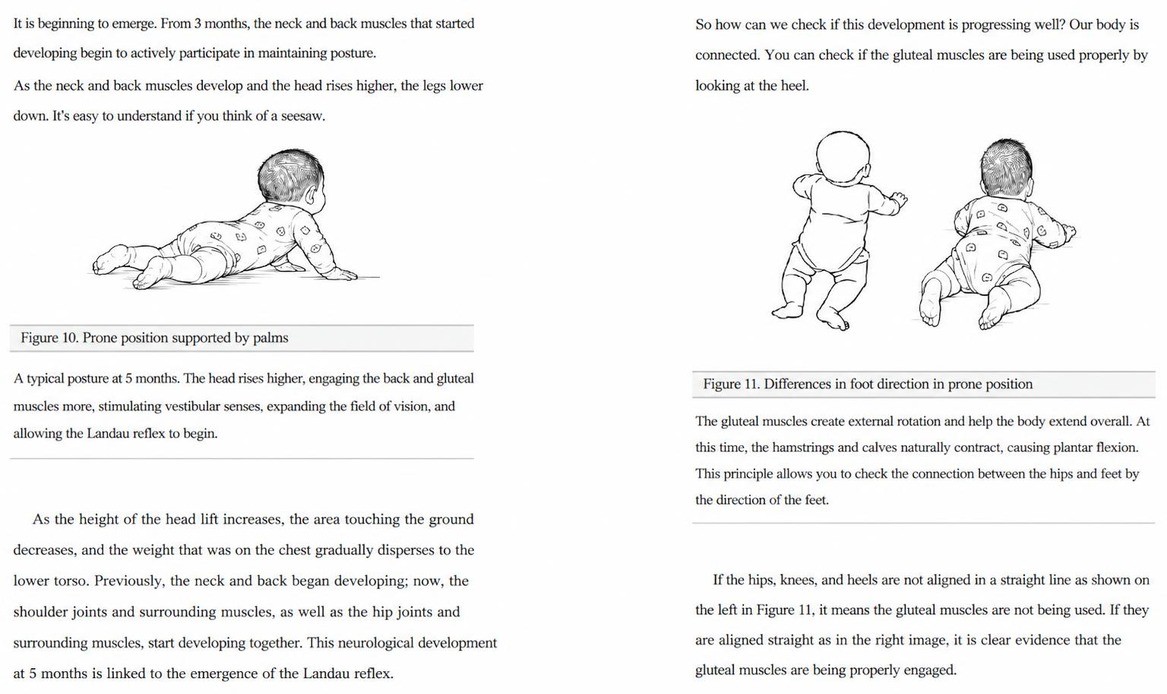
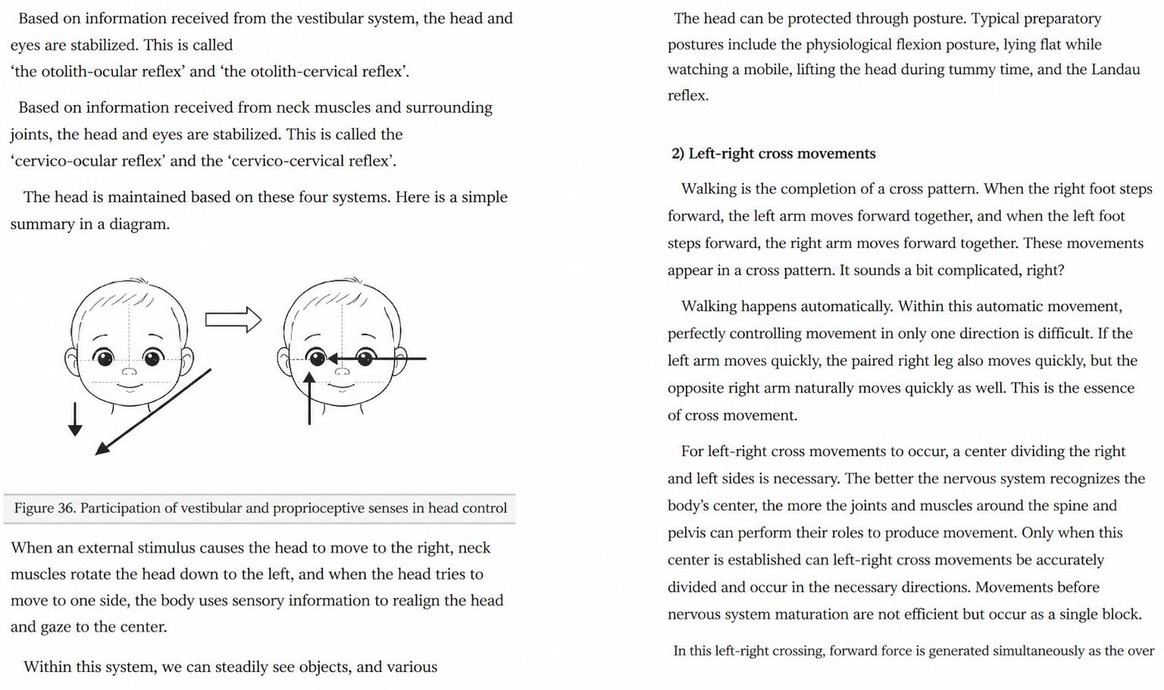
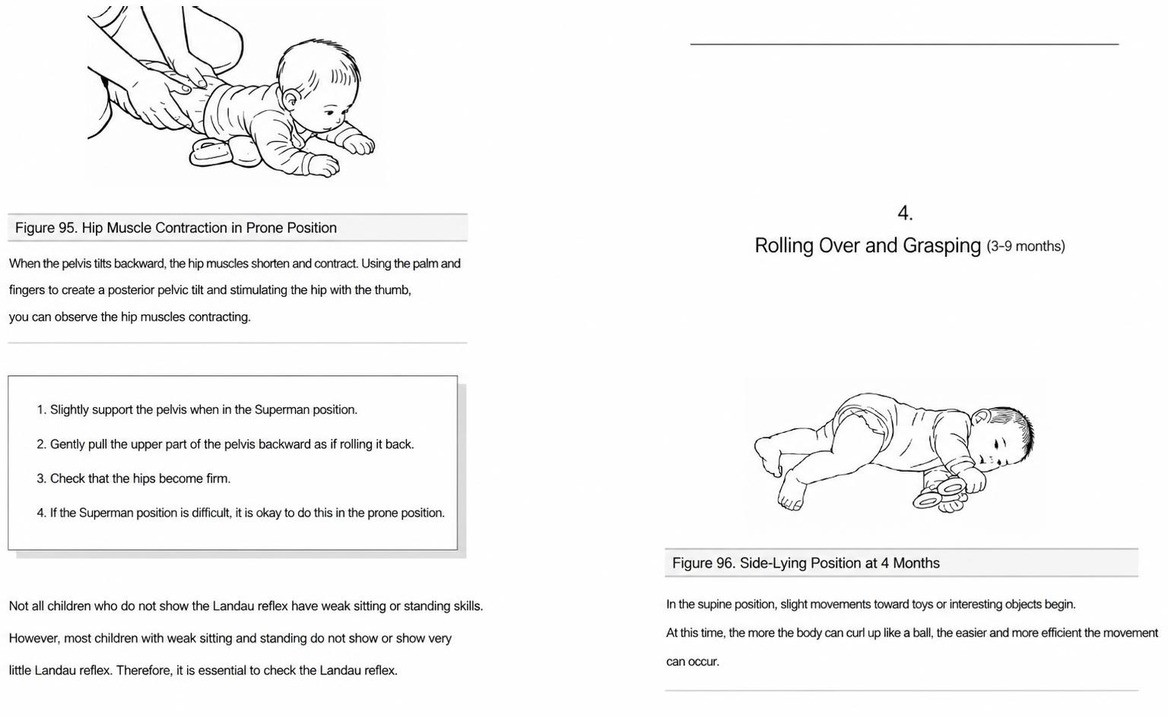
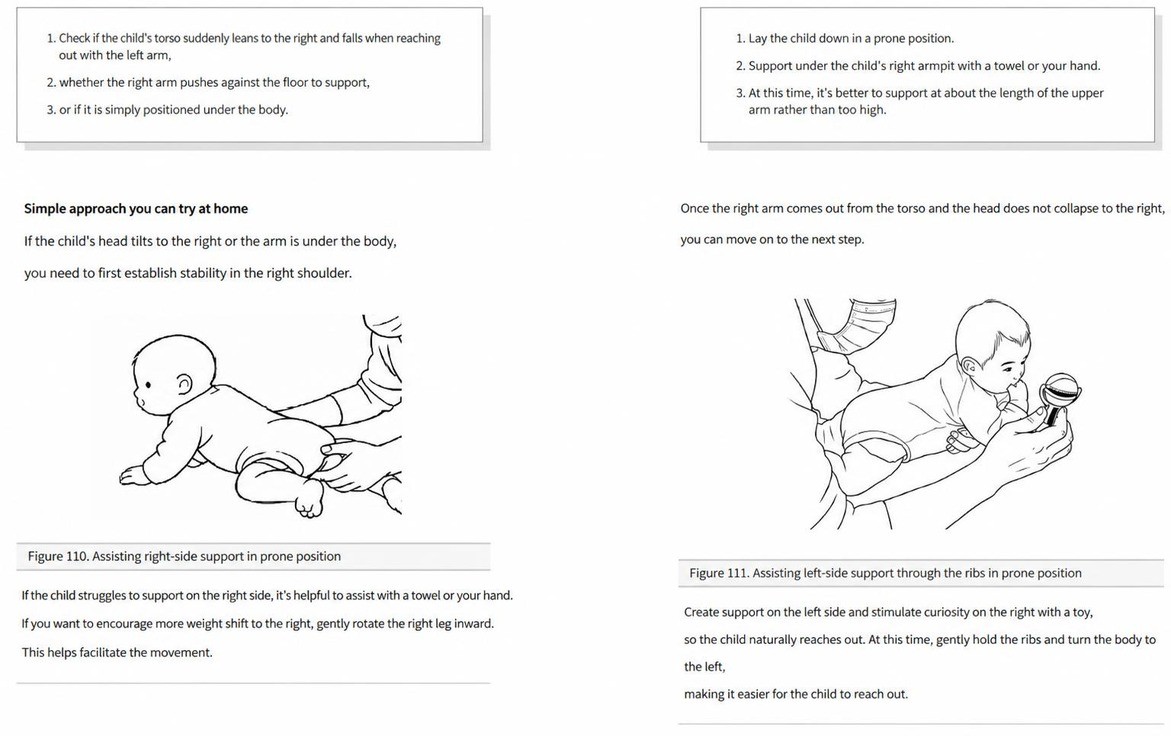
It consists of over 200 illustrations and 167 developmental topics.
In particular, the illustrations use real models to make it easier for readers to understand.
There is not just one correct way for a child's development.
Each child develops at a different pace and has their own way of moving.
So this book is not simply
a book that says, "You must do this in certain months."
It is not that kind of book.
Even with the same rolling over, why does the child only roll to one side?
Even with the same sitting, why can't the child freely use both hands?
Even with the same walking, why does the child appear particularly unstable?
So that you can read these things from your child'sposture and movements, this book is structured accordingly.
Parents do not need to observe every movement of their child through the eyes of a therapist.
However, if you can notice the small signals your child sends a little earlier,
it can help you distinguish when to worry and when it is okay to wait.
And above all, through this book,
rather than comparing your child's development to other children,I hope you can look at your child today compared to your child yesterday.
I hope you can see your child in this way.
Starting from lifting their little head,
to rolling over, sitting, crawling, standing up, and finally walking on two feet toward the world.
There is a reason for every movement.
"A Developmental Map of Our Child Read Through Movement"
This will be the first guide to help you understand the reason.
Table of Contents
Author's Note
Chapter 1: Building the Foundation for Understanding Normal Development
1. Growth and Development
: 'Growth' as the body grows and 'development' as one learns posture and movement.
2. Reflexes, Responses, and Movements
: 'Reflexes' and 'responses' that occur unintentionally, and 'movements' that are intentional.
3. Gross Motor Skills and Fine Motor Skills
: 'Gross motor skills' that deal with posture, movement, and balance, and 'fine motor skills' that are delicately controlled.
4. Motor Commands and Sensory Information
: 'Motor commands' that move the muscles, and 'sensory information' that perceives oneself and the surrounding environment.
5. Normal
: 'Normal' means naturalness and high efficiency.
Chapter 2: Five Criteria for Understanding a Child's Movements
1. How efficiently does the child move to achieve a goal?
2. How much does the child resist gravity?
3. To what extent can the child maintain symmetry, and how accurate is that symmetry?
4. Can the child adjust muscle involvement as needed?
5. How much stability does the child have when creating movement?
Chapter 3: Understanding Gross Motor Development by Stage, from Fetal Period to 12 Months
1. Gestational Age 28–40 Weeks
1) The First Skill Fetuses Learn: 'The Power to Gather the Body'—Physiological Flexion Posture
2) Connectivity That Strengthens the Physiological Flexion Posture
2. 0–3 Months
1) Less Than 10 Days After Birth
① Recoil Phenomenon That Helps Maintain Posture
② Signal of Brain and Muscle Connection: 'Random Movement'
2) From 10 Days to 1 Month After Birth
① Supine Position and the Sense of Stability Needed for the Baby
3) 2 Months After Birth
① Beginning to Practice Asymmetry and Movement Efficiency
4) 3 Months After Birth
① Development of Back Muscles in the Prone Position
5) Warning Signs in Development to Watch for in 0–3 Months
① Baby Appears to Have Suddenly Lost Strength: When Postural Tone Is Low
② Baby Moves Too Little 1: When There Is Little Sensory Input
③ Baby Moves Too Little 2: When There Is Little Movement of the Feet
3. 4–6 Months
1) Prone Position at 4 Months
2) Landau reaction at 6 months
3) Rolling over and reversing
4) Developmental red flags to watch for at 4–6 months
① Baby unable to do tummy time 1: Unable to lift head
② Baby unable to do tummy time 2: Shoulders and arms do not change direction
③ Baby with weak traction response: Low postural tone
④ Baby with weak or delayed Landau reaction: Slow to process sensory input
4. 7–9 months
1) Crawling on the belly at 7 months2) Crawling on all fours at 8 months
3) Sitting posture by month
4) Sitting posture at 8 months
5) Standing posture and attempts to walk at 9 months
6) Changes in the feet
7) Developmental red flags to watch for at 7–9 months
① Baby unable to maintain sitting posture 1: Weak hips (W-sitting posture)
② Baby unable to maintain sitting posture 2: Does not sit sideways
③ Baby not crawling on all fours: Tracking reasons for choosing other movements
④ Baby with little movement: Excessive force in the ankles
5. 10–12 months
1) Just before walking, the completion of standing.
2) Walking at 11 and 12 months.
3) Developmental red flags to watch for at 10 to 12 months.
① Child unable to maintain a standing posture 1: Child who puts excessive force on their feet.
② Child unable to maintain a standing posture 2: Child who cannot put force on their feet.
③ Child who has difficulty walking: Child who walks with raised arms or has very poor balance.
6. 12 months: The primary completion of developmental milestones.
1) A steady head.
2) Cross-lateral movements.
3) Development of the feet and ankles.
Chapter 4: When you are concerned about your child's posture and movement.
1. Basic criteria.
1) Until when is it okay not to do it?
2) Do I have to follow the order exactly?
3) Is there a golden time for development?
2. Supine position (1 to 7 months).
1) My 4-month-old baby's head is not in the center.2) My 4-month-old baby shows few facial expressions.
3) My 4-month-old baby rarely makes eye contact.
4) My 6-month-old baby keeps sucking their toes.
5) The head of a 5-month-old baby tilts to the left (or right).
6) A 5-month-old baby shows little response to sounds.
7) A 5-month-old baby does not put their hands in their mouth.
8) A 6-month-old baby does not lift their legs or grab their feet.
9) A 7-month-old baby does not attempt to roll over at all.
10) A 7-month-old baby cannot lift their head at all.
3. Tummy Time (1–6 months)
1) A 3–6-month-old baby cannot lift their head.
2) How many times a day should I do tummy time?
3) My baby cries too much during tummy time.
4) The head of a 4-month-old baby tilts to the left (or right).
5) A 5-month-old baby cannot turn their head to the right (or left).
6) A 5-month-old baby does not try to look at higher places.
7) A 5-month-old baby easily falls to the left and right.
8) The hand shape of a 6-month-old baby looks unusual.
9) The foot shape of a 6-month-old baby looks unusual.
10) The torso of a 4–6-month-old baby stays attached to the floor.
11) A 6-month-old baby lifts their legs excessively.
12) The creases on both sides of a 6-month-old baby's hips and legs are different.
13) For a 6-month-old baby, is this the correct Superman position?
4. Rolling Over and Reversing (3 to 9 months)
1) Is it okay if the order of rolling over and reversing is switched?2) My 5-month-old baby does not roll over.
3) My 6-month-old baby only rolls over to one side.
4) My 6-month-old baby uses arms and legs too much when rolling over.
5) I want to help my 7-month-old baby roll over and reverse directly.
5. Crawling on the Belly (5 to 8 months)
1) My 7-month-old baby does not crawl on the belly.2) My 7-month-old baby crawls on the belly using only arms.
3) My 7-month-old baby moves forward using only the right (left) arm.
4) My 8-month-old baby's torso touches the floor.
6. Sitting (5 to 9 months)
1) My 9-month-old baby cannot sit up.2) My 9-month-old baby sits too slouched.
3) My 9-month-old baby cannot play with toys while sitting.
4) My 9-month-old baby sits in a W position.
5) My 9-month-old baby only plays with toys on the right (left) side.
7. Crawling on All Fours Position (7 to 12 months)
1) My 10-month-old baby started other movements before crawling on all fours.2) My 10-month-old baby cannot crawl on all fours.
3) A 10-month-old baby uses both crawling and belly crawling.
4) The posture of a 10-month-old baby collapses forward.
5) The posture of a 9-month-old baby collapses backward.
6) Started crawling too early, and the torso appears weak.
Chapter 5. Changes in body alignment to observe during developmental stages.
1. Changes in head shape: Plagiocephaly and brachycephaly.
1) Definition of plagiocephaly and brachycephaly.
2) Periods and causes when positional deformities are more likely to occur.
3) Criteria for determining observation versus active intervention.
2. Facial asymmetry: Differences in eyes, cheeks, and mouth corners.
1) When the eyes appear asymmetrical or one side is favored.2) When the cheeks and mouth corners appear asymmetrical or only one side lifts.
3. Changes in mouth and jaw: Jaw position, movement, and mouth opening.
1) Changes in jaw position and movement.2) Habitual mouth opening.
4. Changes in trunk alignment: Scoliosis.
1) Differences between C-curve and S-curve.2) Cases suitable for observation versus those requiring hospital evaluation.
5. Changes in pelvis and hip joints.
1) Pattern of excessive inward rotation of the hip joint (increased femoral anteversion).
6. Changes in foot and ankle alignment
1) Flat feet
2) Varus and valgus feet
Chapter 6 Walking: The Flower of Patterns
1. Walking: The moment hands become free
2. Two movements needed before walking
1) Walking sideways while holding the wall
2) Kneeling
3. Walking with immature patterns
1) A 20-month-old child walks with hands up like a bear.
2) A 24-month-old child walks with one arm slightly raised.
3) A 24-month-old child walks with their head tilted.
4) A 24-month-old child often falls and walks with their belly sticking out too much.
5) A 24-month-old child walks straight but veers to the right (or left).
6) A 24-month-old child can only walk up stairs while holding hands.
Chapter 7 Useful baby products by age and precautions when using them
1. Newborn to 3 months
1) Swaddle blankets, Swaddle Up, SwaddleMe
2) Pacifiers and teethers
3) Anti-reflux cushions and baby mats
2. 4 to 10 months
1) Baby chair2) Snacks for infants
3) Tummy time and toys
4) Walker and walking aid
3. When starting to walk after 12 months
1) Criteria for choosing socks and shoesIn conclusion - We support the precious time of parents and children.