 typophile
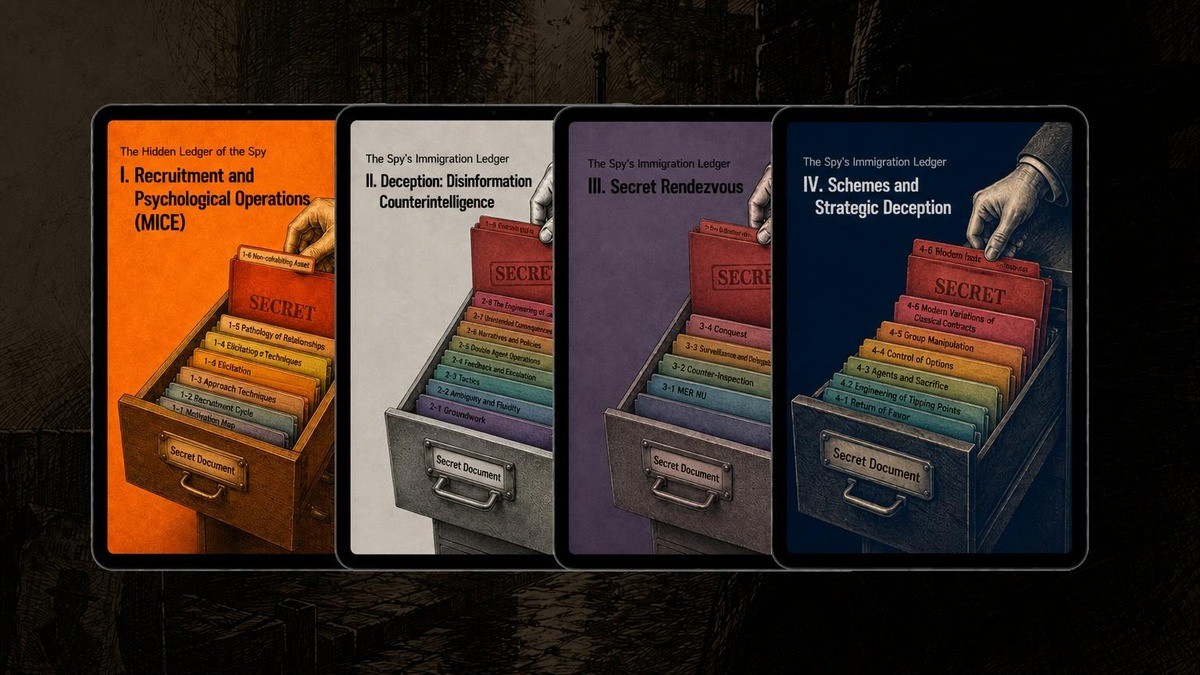

This bookThrough the world of spies,
shows how peopleare exploited and end up taking on unwanted responsibilities.
At workwhen you are assigned tasks, in relationshipswhen you can't say no,
or when you are dragged along because of weaknesses or guiltif you have ever experienced this,this book will help you.
While reading spy stories,
you will learn how someone manipulates people's minds
through this book.
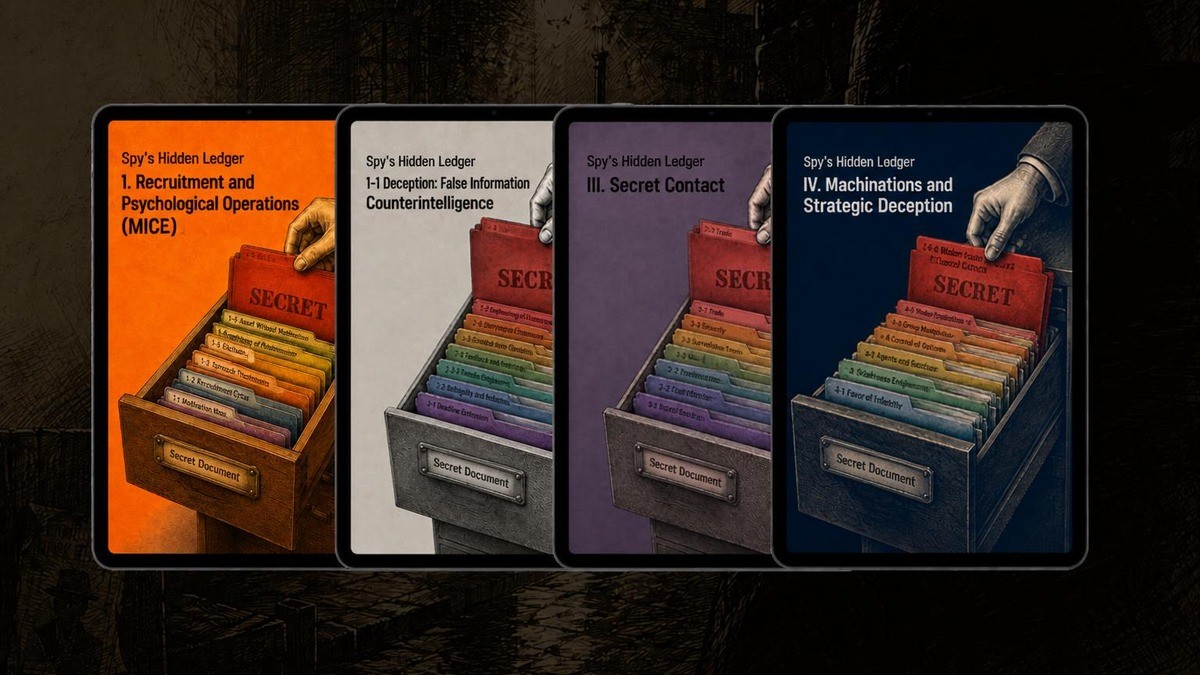
These are materials collected with the intention of writing a novel.
Not a spy from the movies,but a real-life spy—I wanted to know what actions they take.
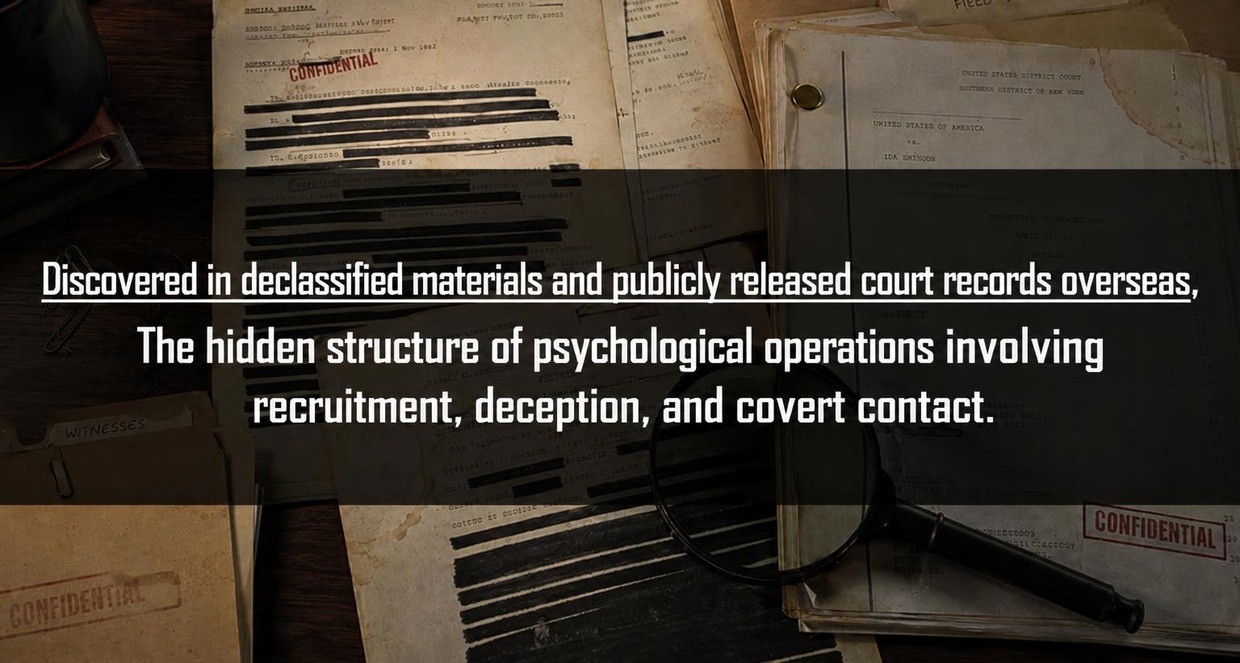
This material is compiled from overseas court records, declassified documents, congressional hearing transcripts, and memoirs of retired intelligence agents,
real spies and summarizes what actions they actually take.
Questions this book addresses
Why do people betray?
Why do some people act not for money, but because they want recognition?
Why does false information, once introduced, grow on its own?
Why do secret meetings leave traces not on the participants,
but in the access records and daily rhythms of people around them?
Why do organizations hide responsibility not in directives, but in procedures and practices?
This book organizes these questions into afour-part structure.
Part I - Recruitment and Psychological Operations
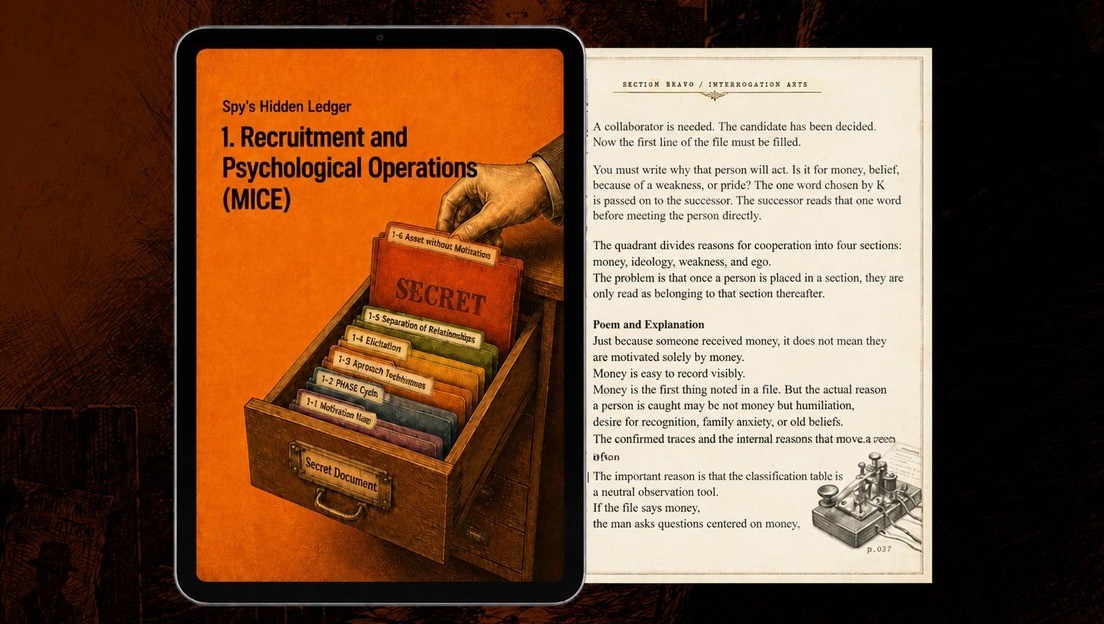
Part I explores why people cooperate and why they believe that cooperation is their own choice. It examines how motivations such as money, ideology, weaknesses, and ego work, and shows how actual contact solidifies into relationships.
The key is not "how to persuade people," but rather to read how people gradually give in within certain relationships and situations.
I-1: Motivation Map _ Why Do People Take Action?
It examines reasons people are swayed, such as money, beliefs, weaknesses, desire for recognition, and loneliness, and organizes the starting point of the mindset where cooperation begins.
I-2: Recruitment Cycle _ How Does a Meeting Become a Managed Relationship?
It covers the process in which repeated contacts that seem coincidental are recorded, and how expectations and obligations accumulate, making it difficult to leave the relationship.
I-3: Approach Techniques _ How Do Words and Atmosphere Sway the Mind?
It shows how the other person's tone, compliments, empathy, silence, and atmosphere lower defenses and make people open up on their own.
I-4: Elicitation _ How Do People Speak Without Being Directly Asked?
It deals with the flow in which people voluntarily reveal information and explain their thoughts in conversations and situations that do not appear to be questions.
I-5: Pathology of Relationships _ What Breaks Down When Relationships Last Long?
It examines how, as cooperative relationships become prolonged, trust, guilt, dependence, and fear become entangled, leading to the collapse of judgment and daily life.
I-6: Assets Without Motivation _ Why Do We Keep Using People Who Are Hard to Trust?
It organizes the reasons and risks why people with unclear or unstable motivations continue to be used due to organizational needs and management logic.
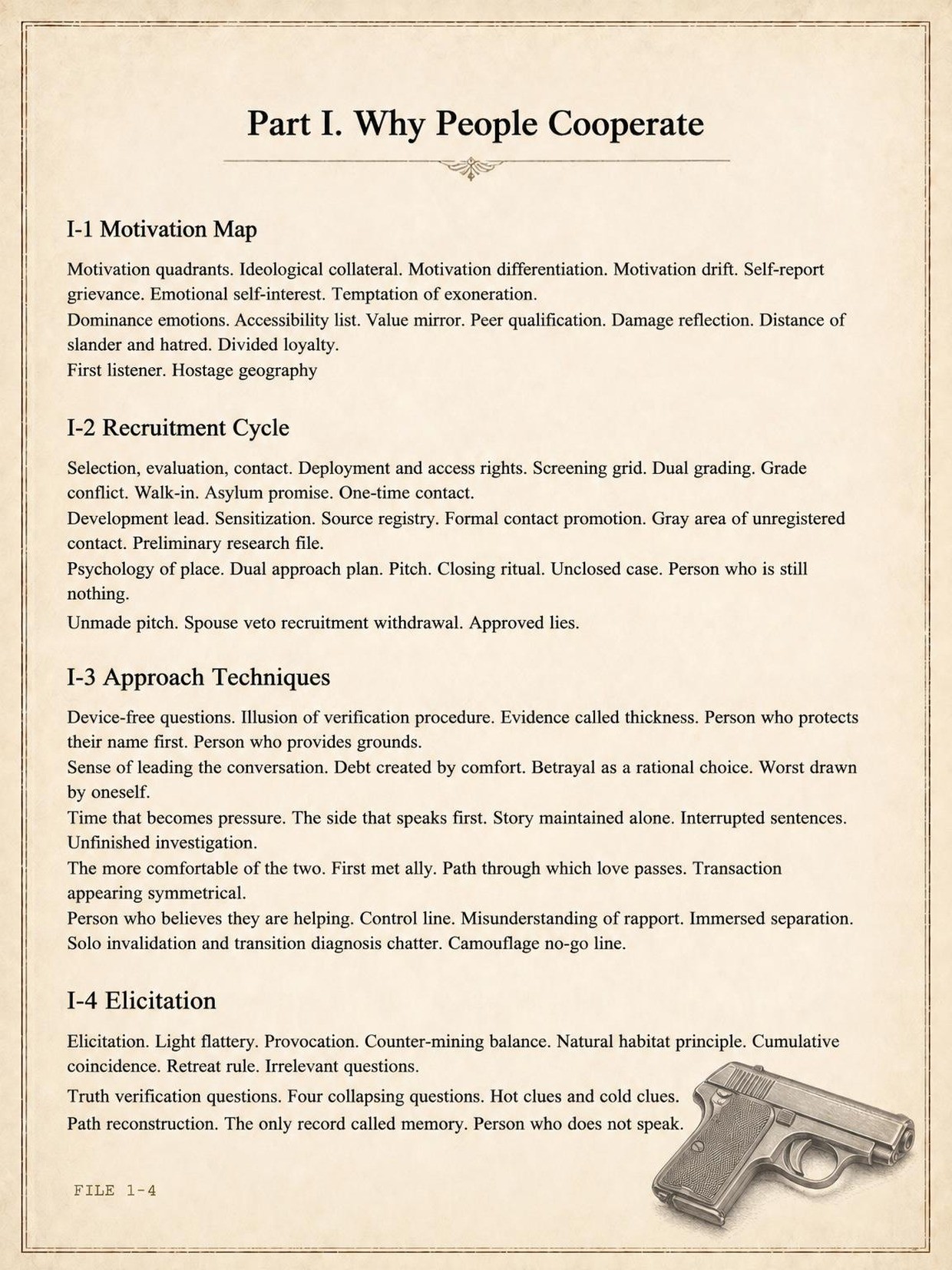
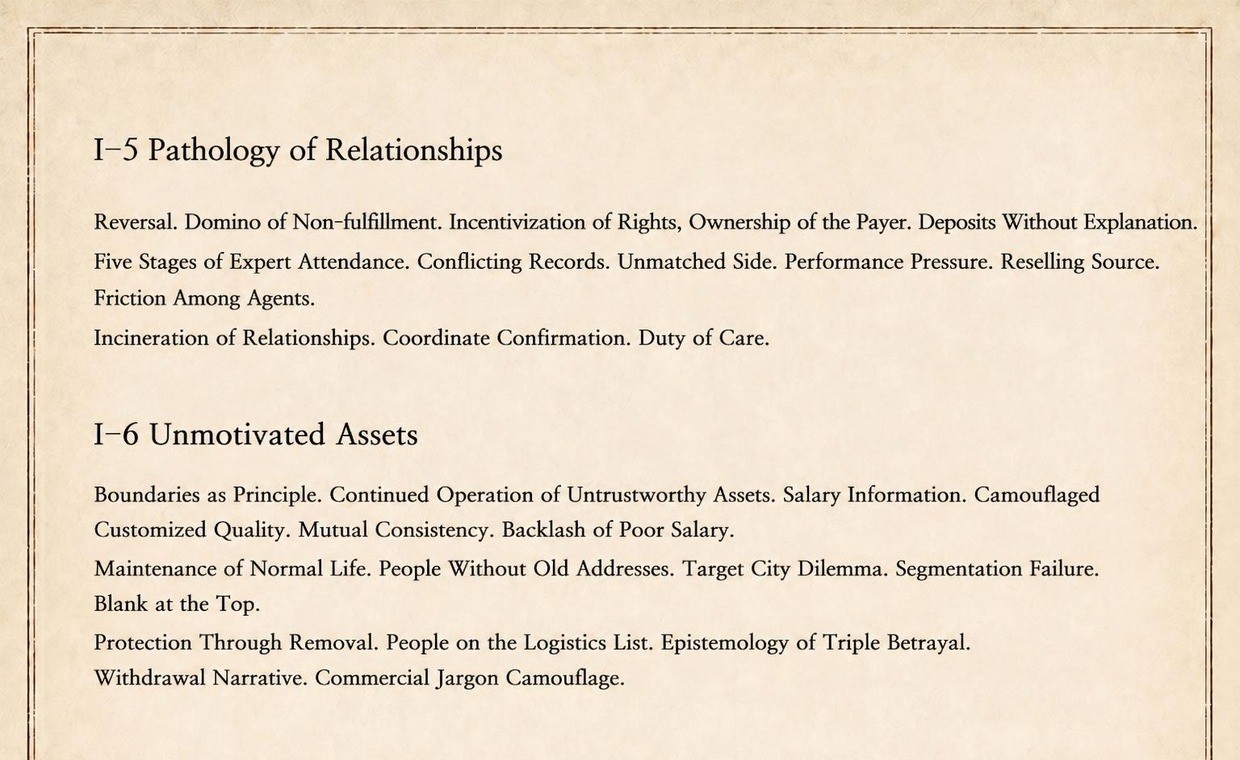
Part I consists of a total of6 chapters, 113 sections.
The length is about450,000 characters, about 600 pages Approximately.
[We are currently working on both the page design and editing the main text,
so the final version may differ slightly in length.]
This page is for introducing the items and is not the actual table of contents design.
IPart actual table of contents design is as shown below,Items and brief descriptions are included.
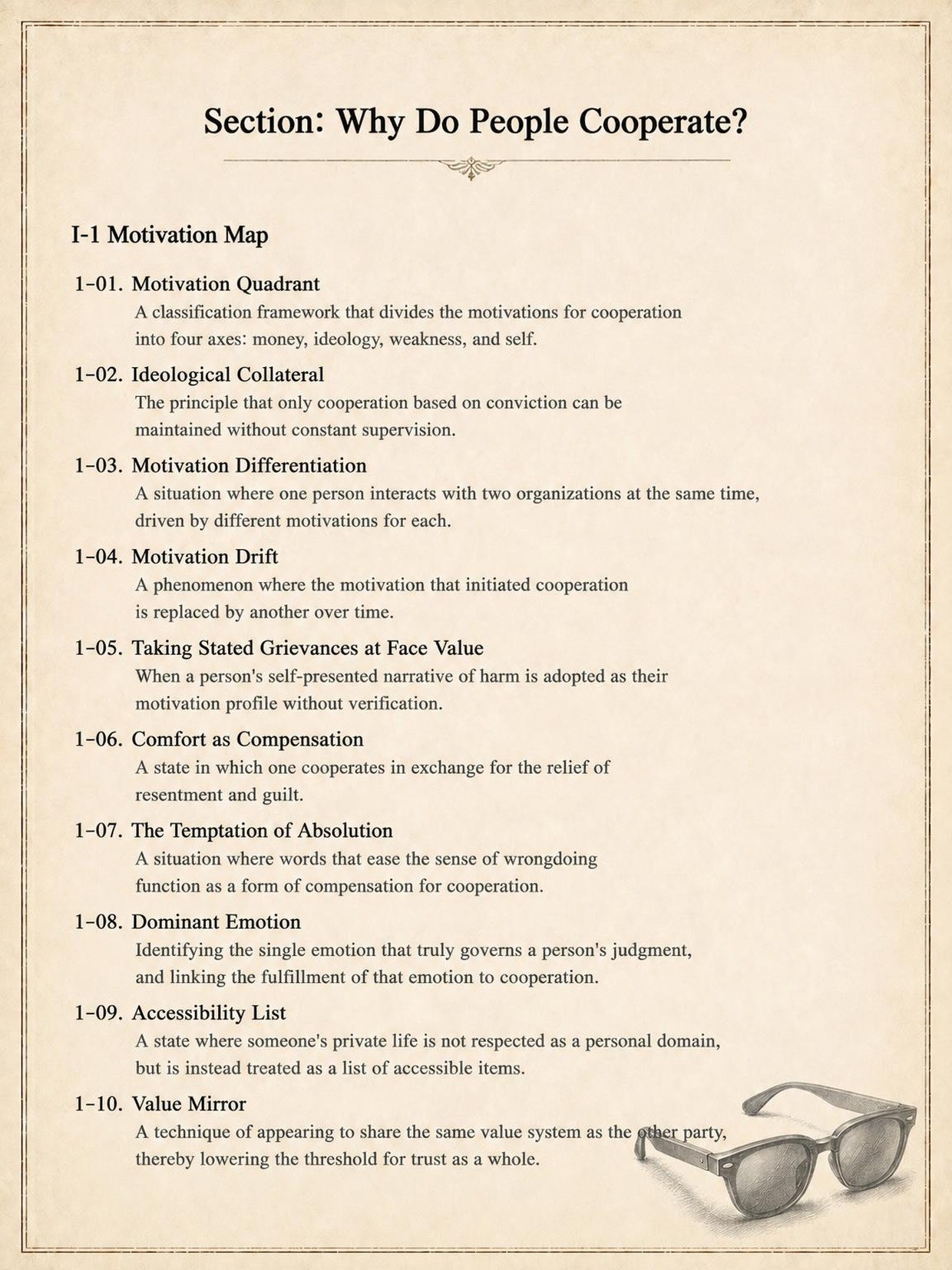
IPart 1-6 items Main page about the Reward called 'Consolation'
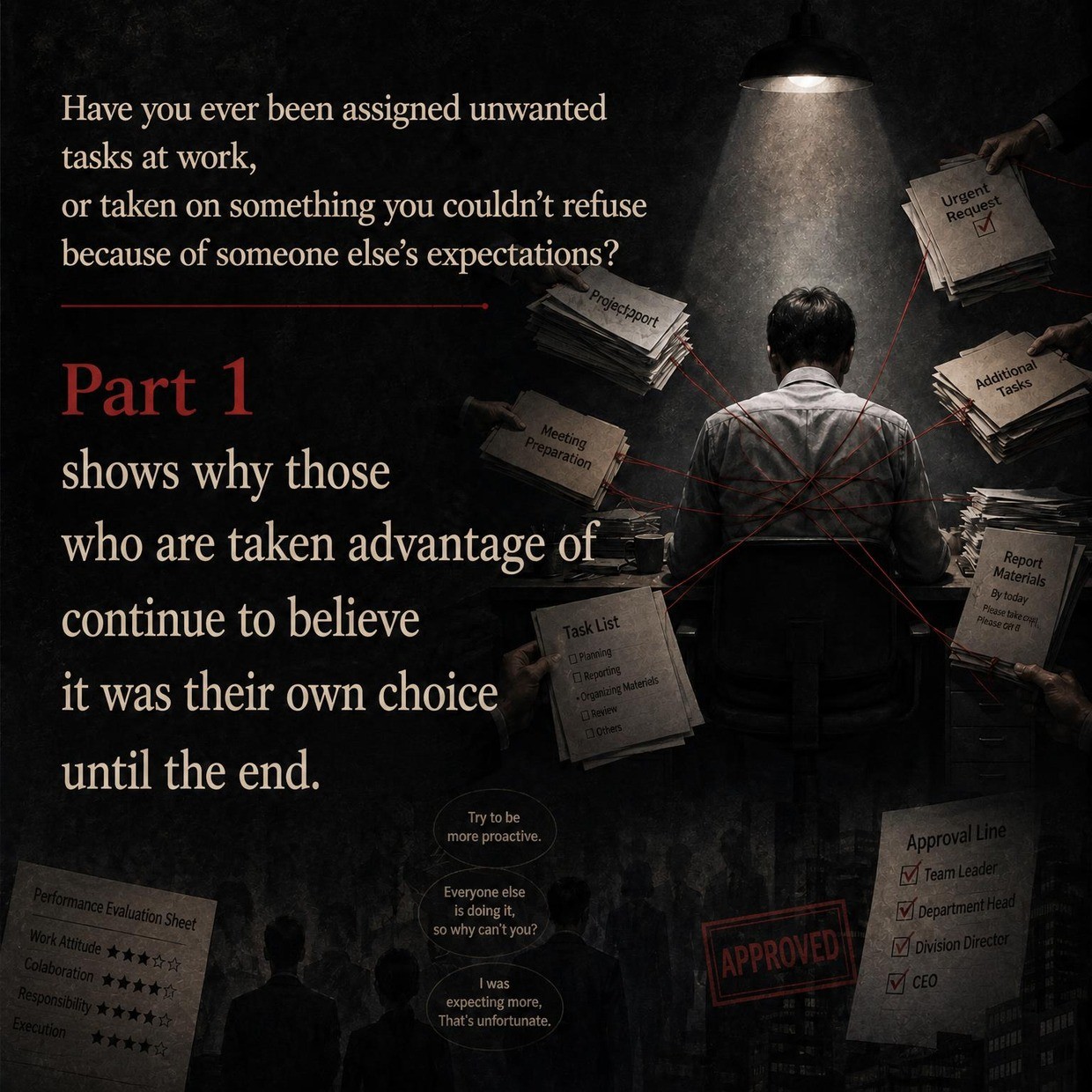
This is the design of each main page from Part 1 to Part 4.
We are designing to further refine and create the optimal state.
The final design may be different.






Part II - Deception, false information, counter-operations
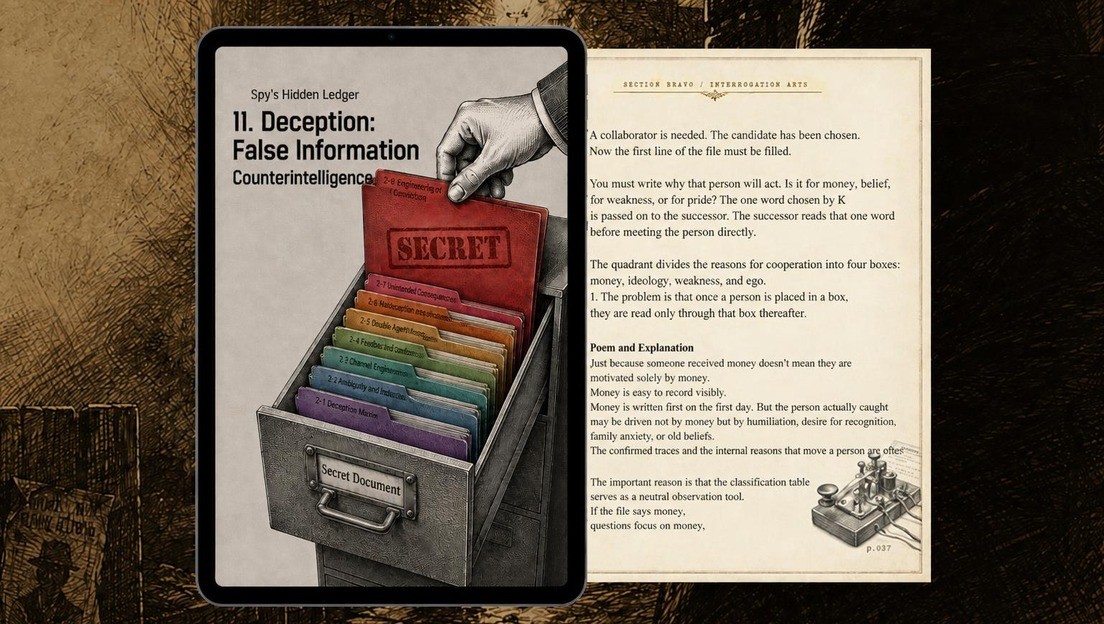
Part IIWhy people or organizations are deceived is discussed.
This is not a story about telling a single lie,
It examines why that lie seems plausible and why, over time, it grows to appear even more believable.
Simply put, the core of Part II isnot the lie itself.
It is the process in which the passage of the lie, surrounding evidence, verification procedures, and people's expectations combine
to create the conviction that "This must be true.".
II-1: Deceptive Proverbs _ Why do people fall for what they want to believe?
This section covers the basic conditions under which people easily accept information that matches their existing beliefs and expectations, while ignoring opposing evidence and falling into misjudgment.
II-2: Ambiguity and Induction _ How does vague information sway judgment?
This section discusses deceptive methods that scatter judgment with information open to multiple interpretations or lead people to choose a specific false conclusion themselves.
II-3: Channel Engineering _ Through what paths does information gain trust?
This section explores how the credibility of the same information changes depending on whether it arrives via people, documents, rumors, or official channels.
II-4: Feedback and Confirmation _ How do others' reactions amplify deception?
This section covers how checking others' reactions leads to the refinement of false information, and how interpreting those reactions as evidence of success makes deception more sophisticated.
II-5: Double Agent Operations _ How does one person sway both sides' judgments?
This section discusses the structure in which one person exchanges information between two organizations, making it unclear who is using whom.
II-6: Counter-Deception and Counterintelligence _ Why can those who try to prevent deception be deceived again?
This section addresses the risks that arise when suspicion and conviction during the process of verifying the source and intent of information and tracing it back lead to yet another misjudgment.
II-7: The Price Behind _ What Consequences Does a Successful Deception Leave?
This section discusses how, after an operation ends, the wrong person is suspected, records and relationships are damaged, and the habit of success leads to the next failure.
II-8: The Engineering of Conviction _ How Does a Hypothesis Become the Organization's Conclusion?
This section covers the process by which uncertain information, through reports, meetings, and repeated confirmations, pushes out opposing opinions and solidifies as established fact.
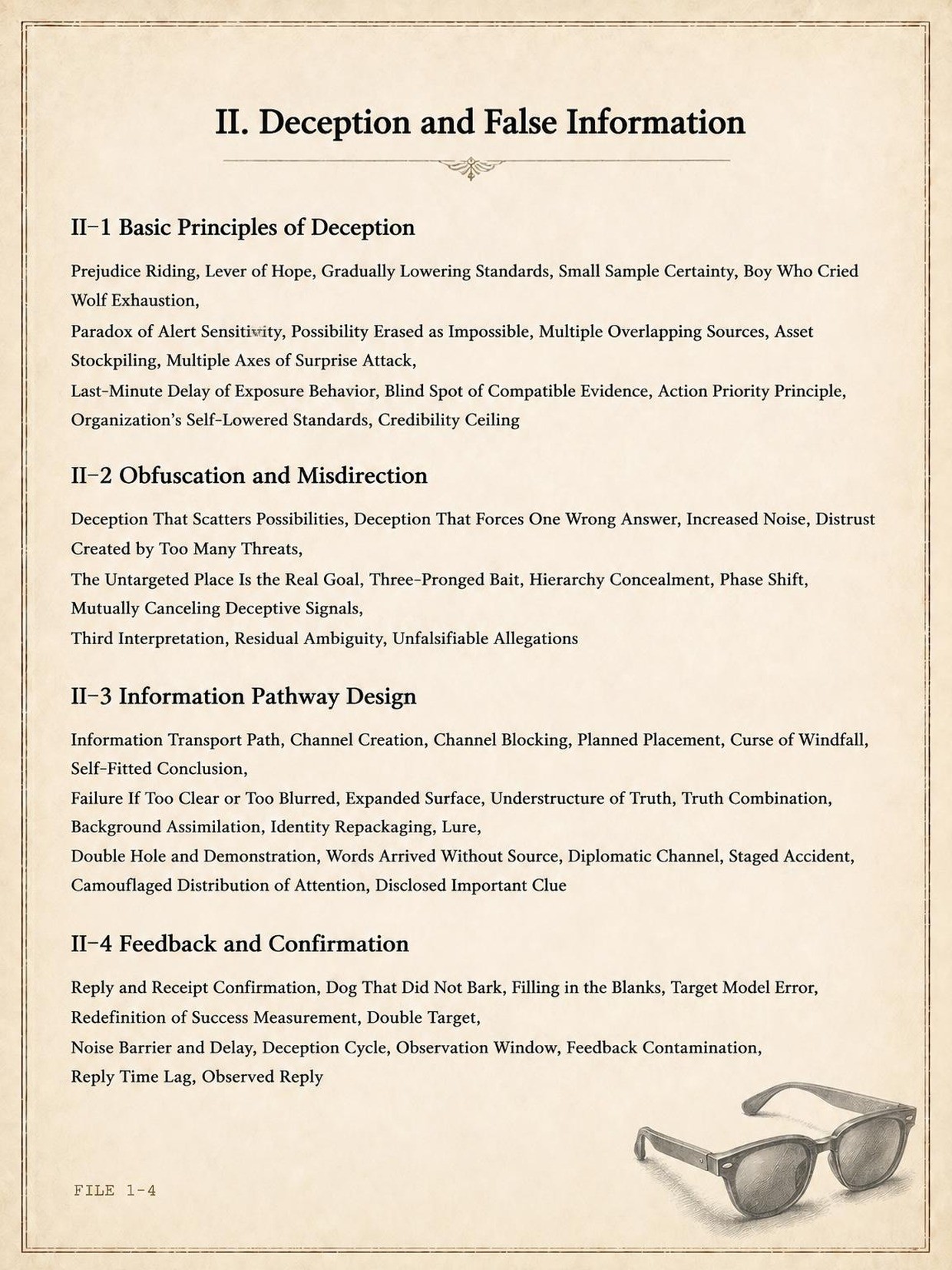
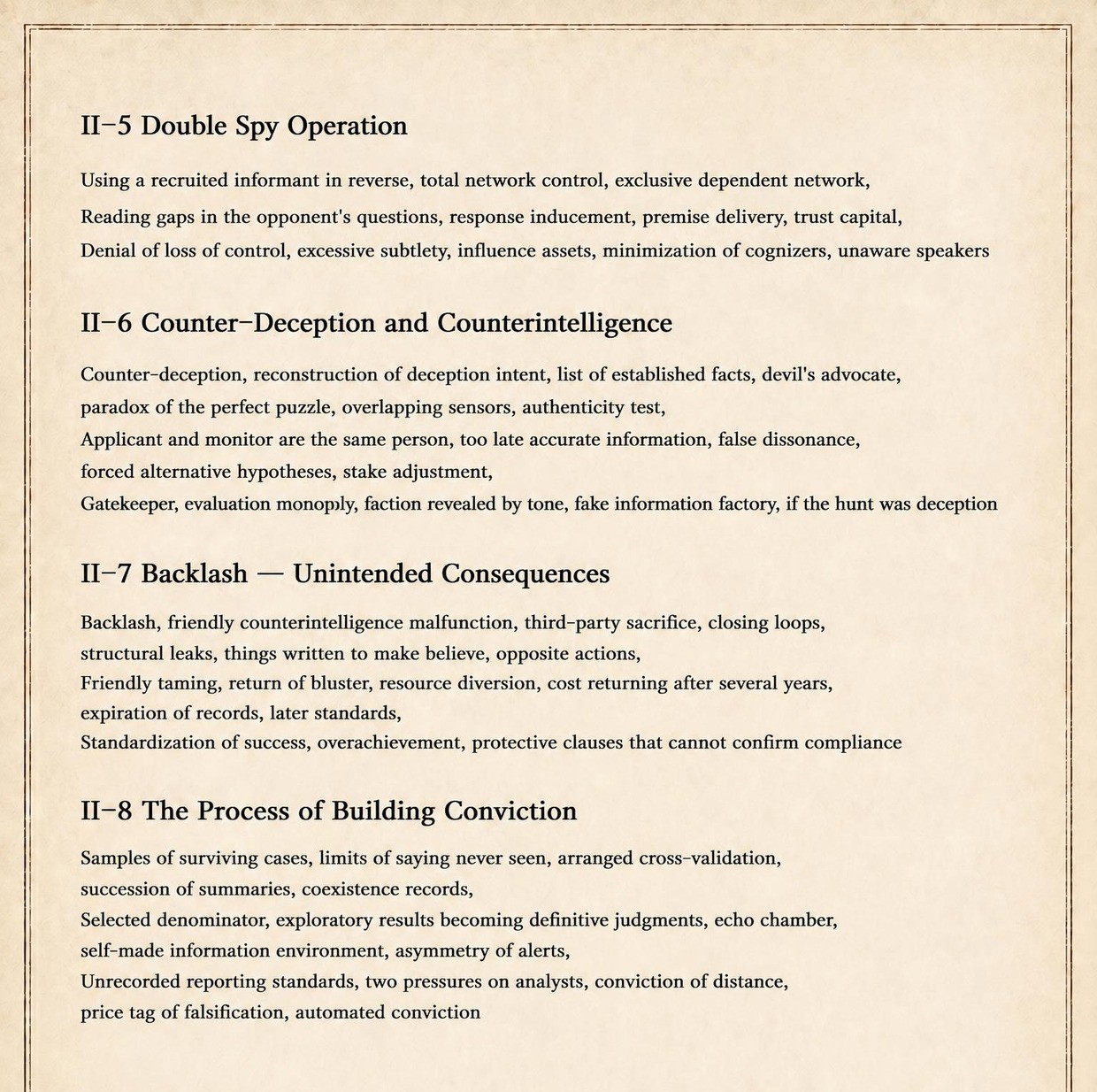
Part II Consists of a total of 8chapters and 118 sections.
The length is approximately 380,000characters, about 500 pages in total.
[Currently, page design and main text editing are being carried out together,
so the final completed version may differ slightly in length.]
This page is for introducing the sections and is not the actual table of contents design.
Part IIActual Table of Contents Design is as follows below,including sections and brief descriptions.
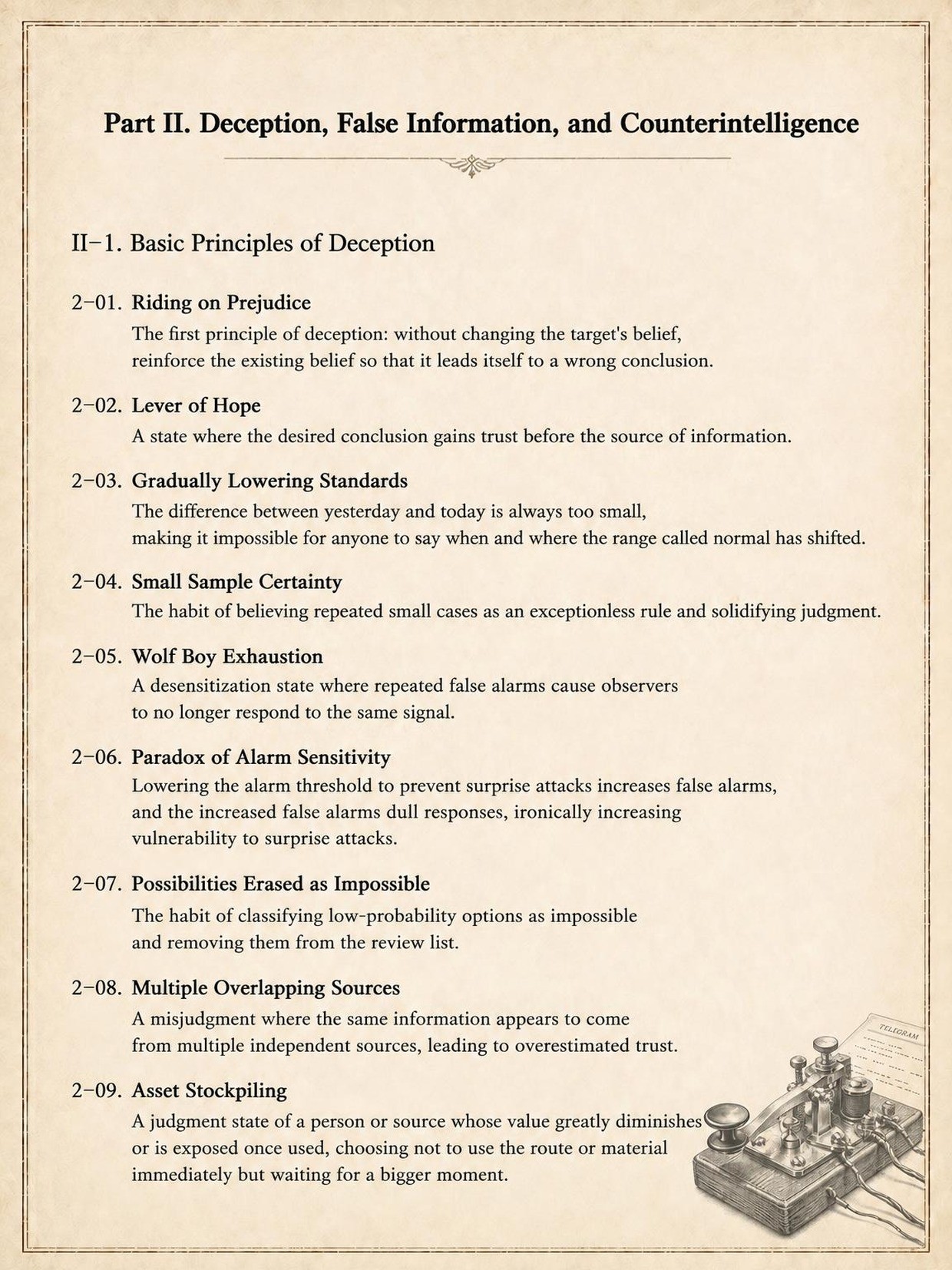
2-08-3. Designed Cross-Verification
K's Situation
K wants to make the other person believe a certain claim.
However, if K says it directly, it is persuasion, and if it sounds like it comes from just one person, it is closer to a rumor. The other person may ask, "Do you have more evidence?"
So K makes the same content appear in various forms.
At first, it appears as a statement from an industry insider, then it is summarized as a sentence in an article. A few days later, it reappears as an expert's commentary or a reference sentence in a report.
What K is aiming for is not simple repetition.
It is to make the other person think this way.
"This isn't just one person's words."
"The same story is coming from multiple places."
"If that's the case, it must be somewhat verified information."
...
Definition
A phenomenon where a single piece of information is repeated as if it comes from multiple sources, leading to the misconception that it is a fact verified multiple times.
Definition
When people hear the same story from several places, they tend to think it is reliable information.
If one person says, "This company is about to undergo a major restructuring," it still sounds like a rumor. But if the same story appears in an economic newsletter a few days later, and similar content is mentioned in an industry expert's interview and an online article, the perception changes.
"Since multiple places are saying the same thing, it must be true."
But what if the newsletter, the expert, and the online article are all based on the story told by the first person?
On the surface, it looks like there are three sources, but in reality, it is just one rumor returning through multiple channels. It is not information verified three times,but a story that was repeated three times after being mentioned once. It is.
...
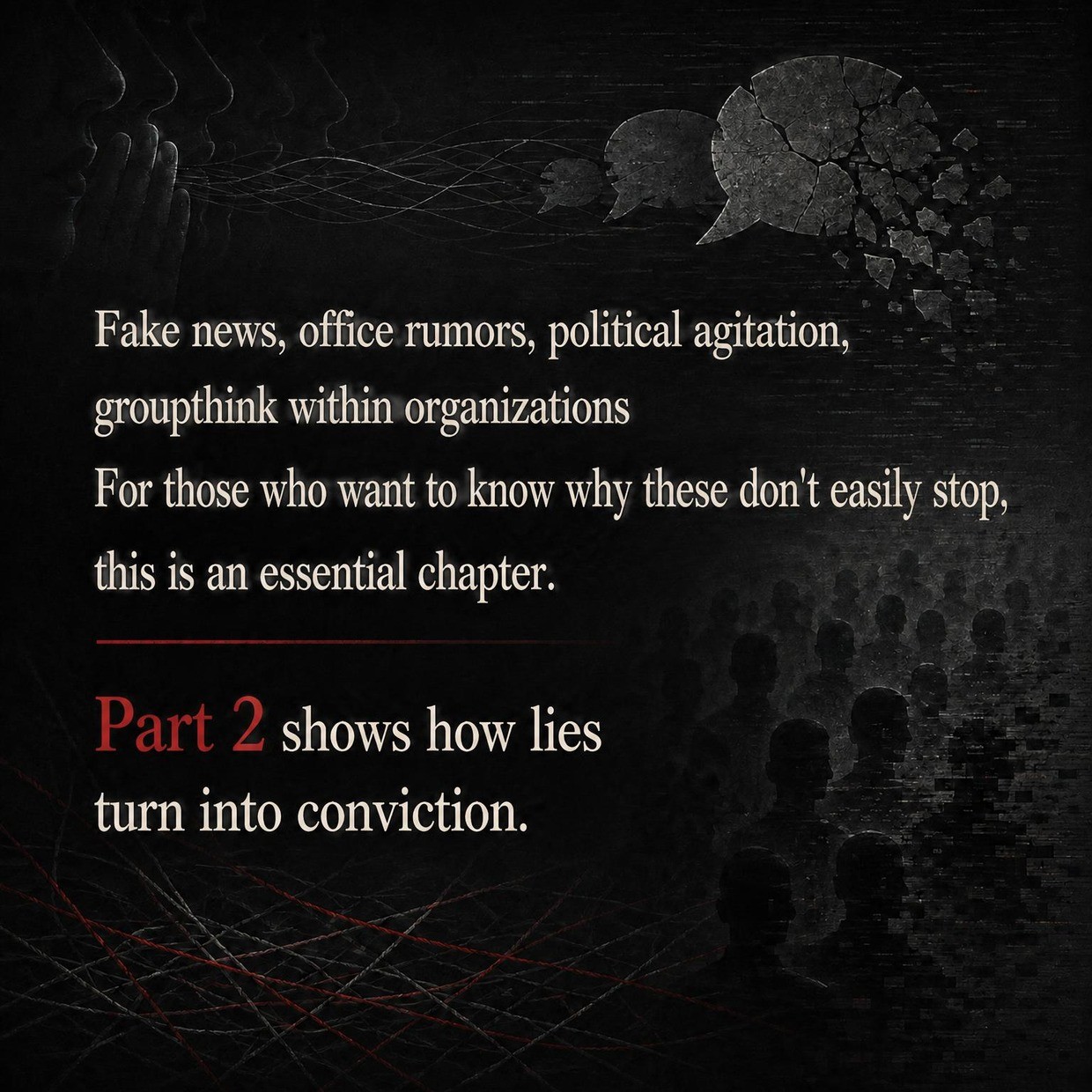
This is a part of the main text of Part 2.
In the entire book, what was initially suspiciousA lie, through surrounding evidence and verification procedures,
As it passes through people's expectations,The process of gradually being accepted as fact is covered.
Part III - Secret Rendezvous
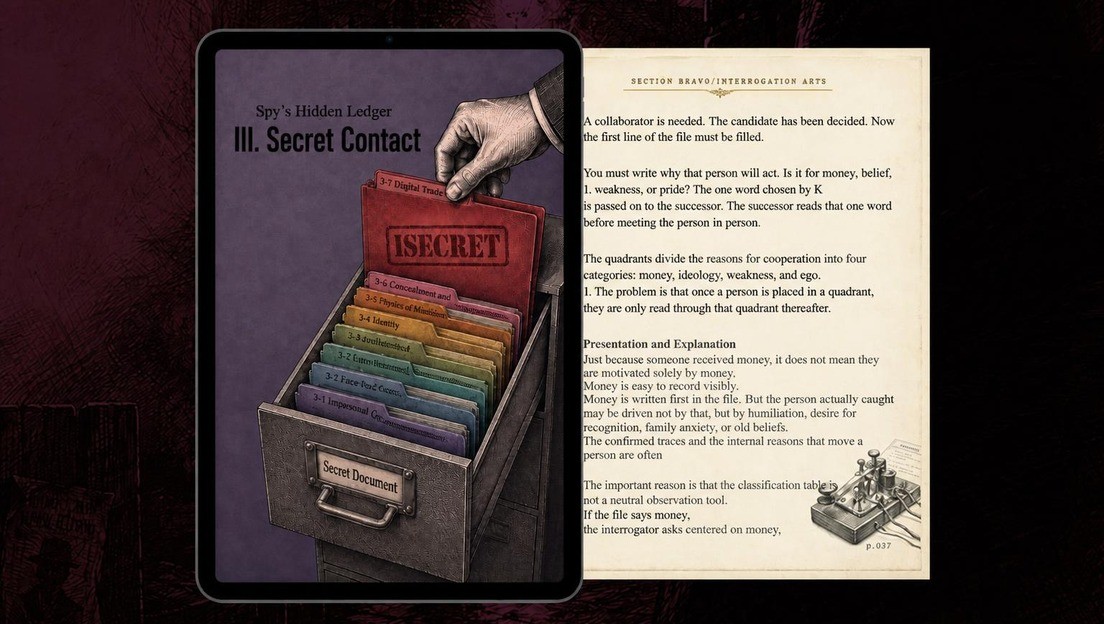
Part III explores how people and information move while avoiding the eyes of others. It examines methods of exchanging items without meeting, direct rendezvous, detecting and evading surveillance, and maintaining a false identity. It also covers ways to hide objects or divert attention, as well as traces left in digital spaces such as accounts, devices, and access records.
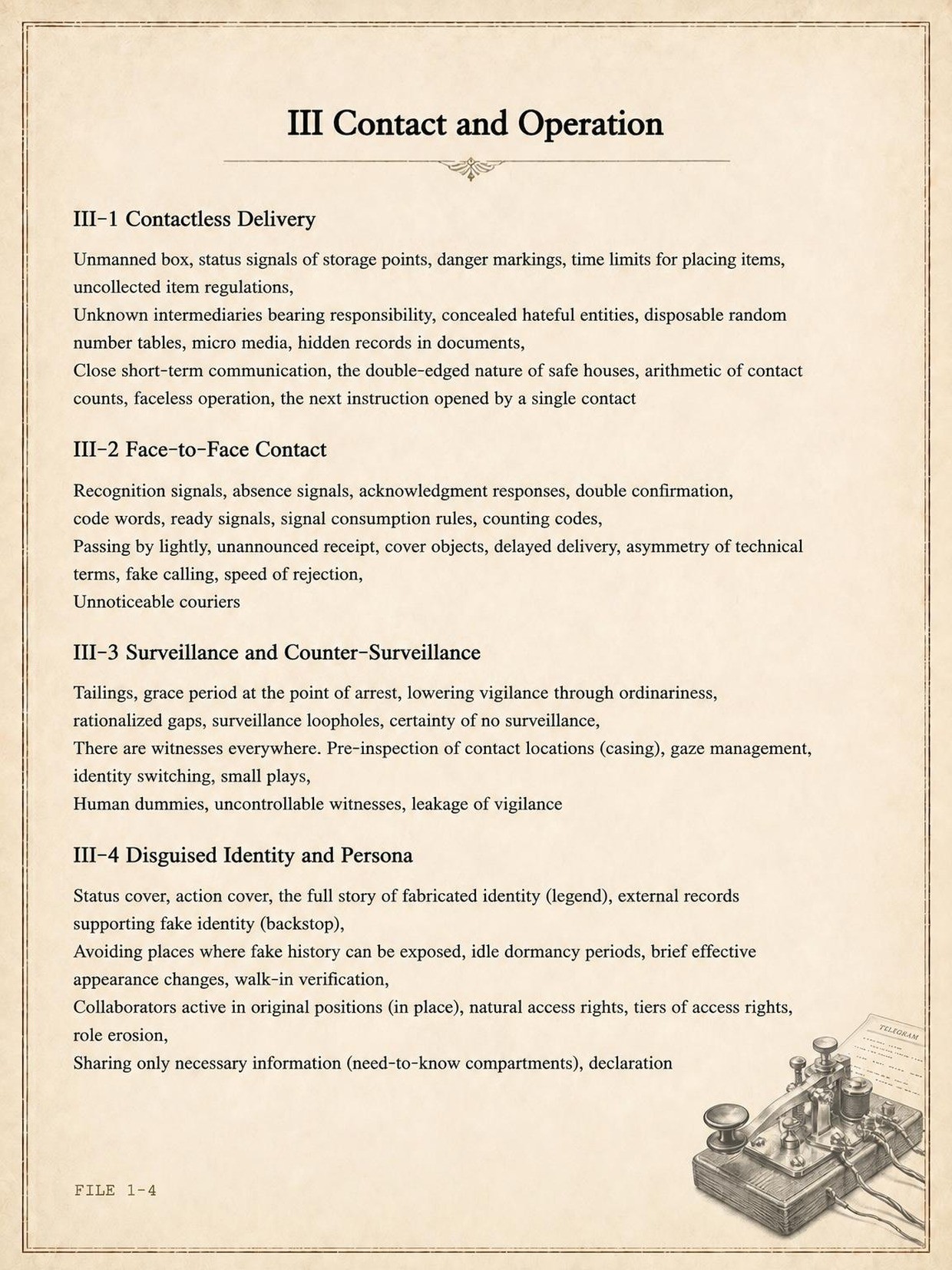
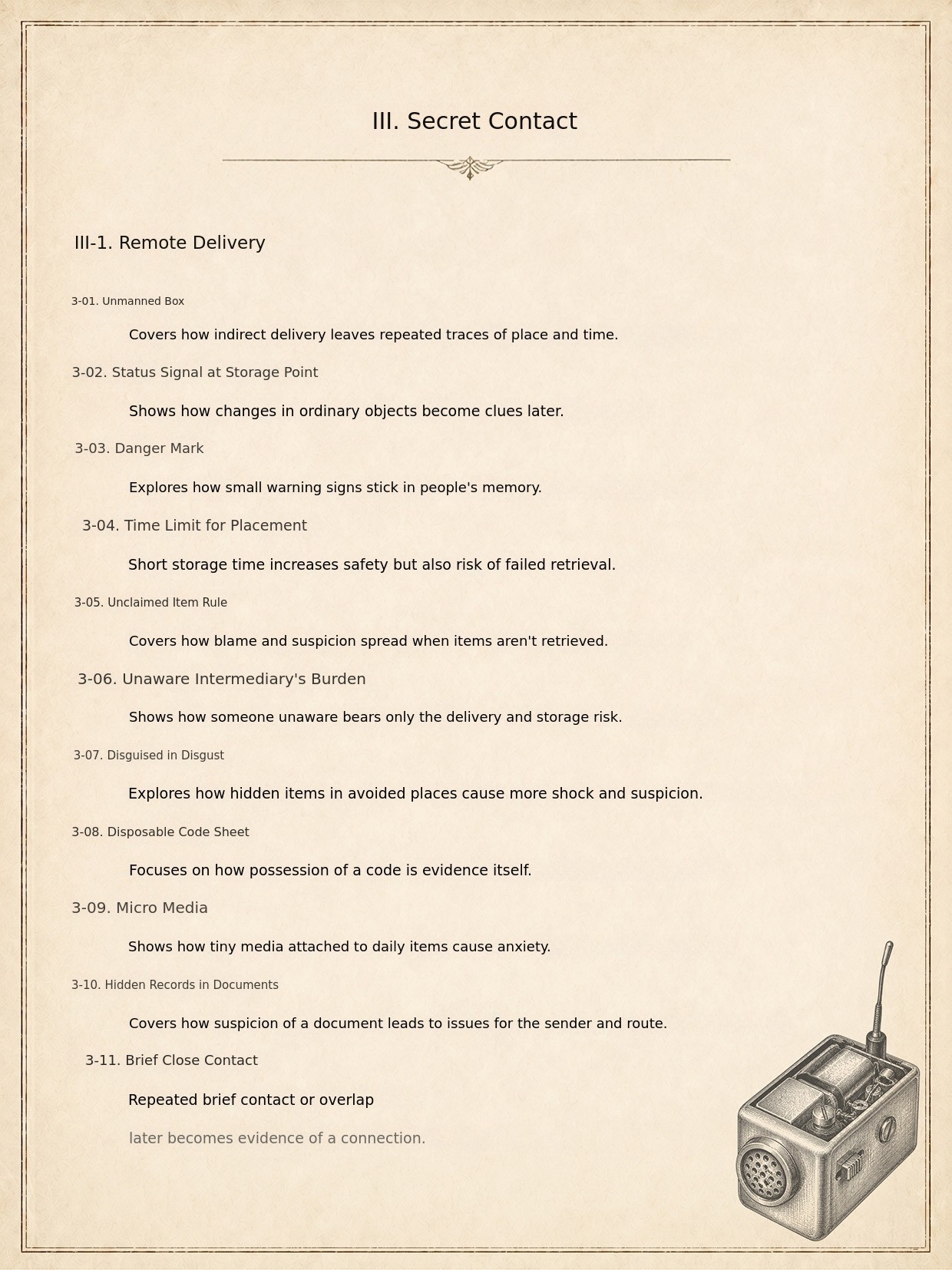
III-1: Impersonal Communication _ How to exchange items and messages without meeting
It covers methods of delivering and confirming items and information without facing each other, using designated locations and signals.
III-2: Face-to-Face Rendezvous _ What traces remain at the moment of direct meeting
It discusses how time, place, and actions are recorded and remembered during the process of confirming the other person with a predetermined signal and making brief contact.
III-3: Surveillance and Counter-surveillance _ How do the watcher and the evader move?
It addresses the time gaps and vulnerabilities that arise as tailing, observation, evasion, and verification are repeated, as well as the burden left on bystanders.
III-4: Identity _ How are fabricated names and identities maintained?
It covers the process of maintaining an identity by matching fabricated backgrounds, professions, and habits with actual records, and how small contradictions can shake that identity.
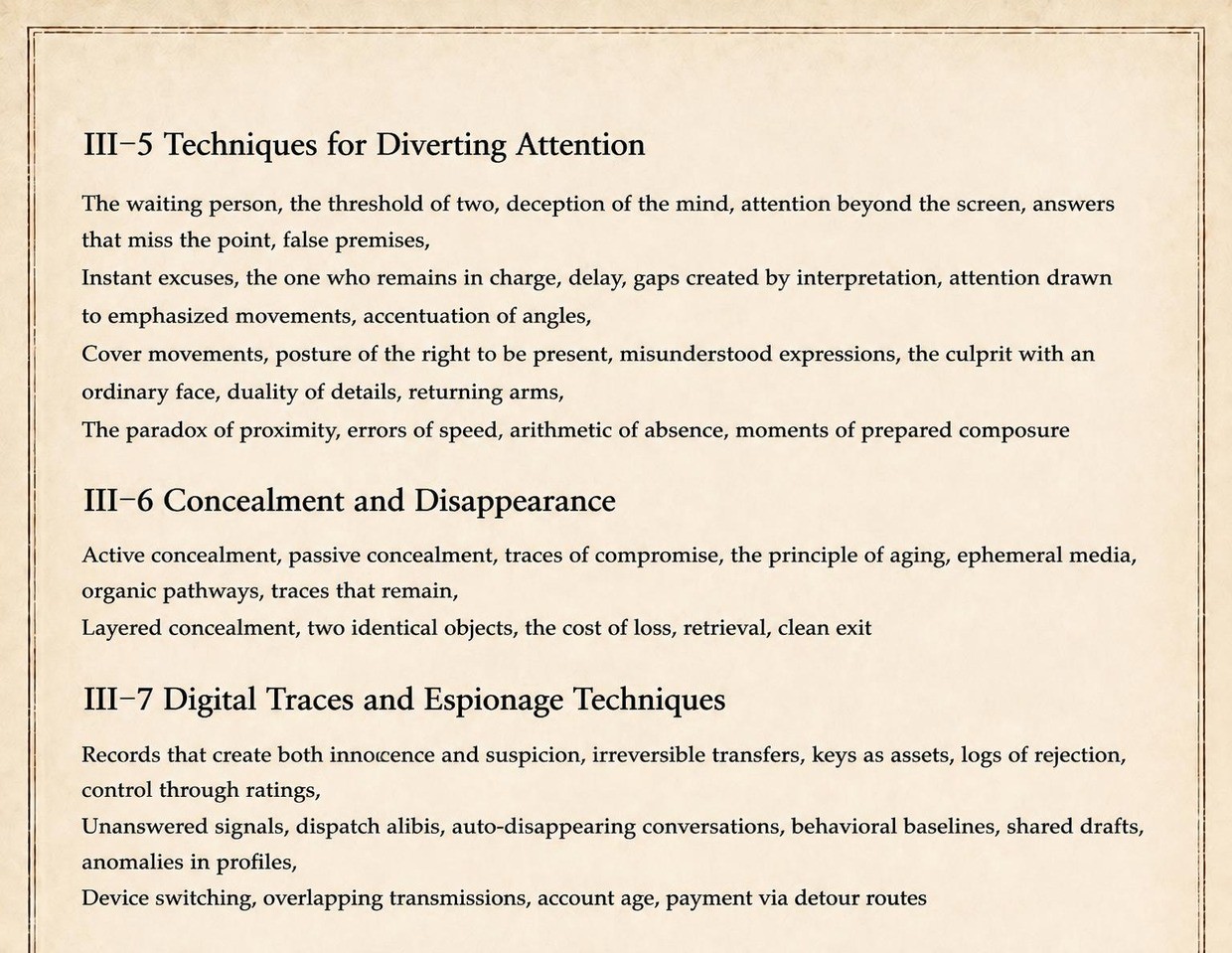
III-5: The Physics of Misdirection _ How Do People's Gazes Shift Elsewhere?
This section explores the principles by which people perceive important scenes differently by using the position and movement of objects, distance and angle, speed and timing.
III-6: Concealment and Disappearance _ How Do Hidden Objects and Records Leave Traces?
This section addresses the responsibilities of loss, discovery, and storage that arise during the process of hiding, moving, retrieving, or eliminating objects or information.
III-7: Digital Tradecraft _ How Do Meetings and Concealment Change in the Digital World?
This section discusses how overlaps in time and place become new traces through accounts, devices, logs, access records, and digital payments.
Part III consists of a total of 7chapters and 108 sections.
The length is approximately430,000 characters, about 580 pages.
[Currently, page design and main text editing are being carried out together,
so the final completed version may differ slightly in length.]
This page is for introducing the sections and is not the actual table of contents design.
Part IIIactual table of contents design is as follows below,with sections and brief descriptions is included.
3-02-16. The inconspicuous messenger
K's situation
K needs to deliver a small item or signal to someone.
However, if they meet in person, there will be evidence that the two were at the same place and time. Someone might remember seeing them together, or their movements could overlap in records.
So K looks for a messenger to act on their behalf.
What matters here is not the ability to wear ordinary clothes or hide objects well.Is it normal for that person to be at that place? is more important.
People like cleaning workers, delivery drivers, inspection staff, or event teardown crew, who are supposed to be there, do not attract attention. They do their assigned tasks and leave naturally when finished. People do not observe them closely as individuals.
Rather than remembering "a person came in"
they remember "there was cleaning," "a delivery arrived," or "an inspector stopped by."
...
One line
A messenger who has a reason to be at the place, is remembered for their job rather than as an individual, and is difficult to identify later.
Definition
An inconspicuous messenger is not simply someone in ordinary clothes.
What is more important isDoes that person have a natural reason to be there? That is the key.
When a stranger lingers in the office hallway, people observe their face and behavior. In contrast, when a courier carrying a delivery box gets on the elevator, or an employee with an inspection bag passes through the office, most people do not look closely.
To be precise, they do look.
However, they do not remember the person by their face, but accept it as part of their work.
As a result, the messenger does not remain as a specific individual. In the witness's memory, only the task—such as "delivery," "cleaning," or "inspection"—remains, rather than the face or appearance.
...
This is a part of the main text of Part 3.
In the entire book,how people connect without being noticed, interact,
and exchange information, as well as the traces and risks that arise in the process, are discussed.
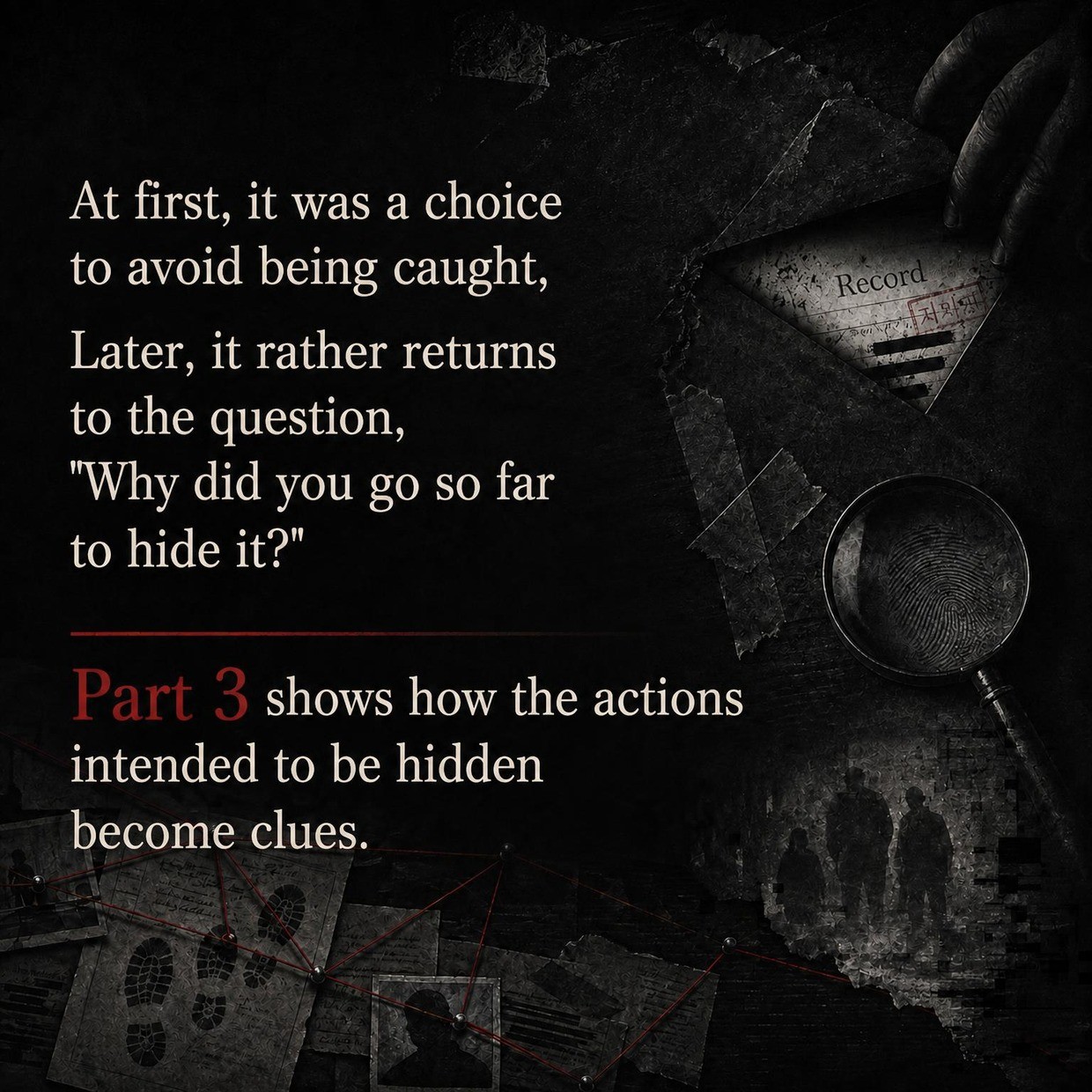
Part IV: Schemes and Strategic Deception
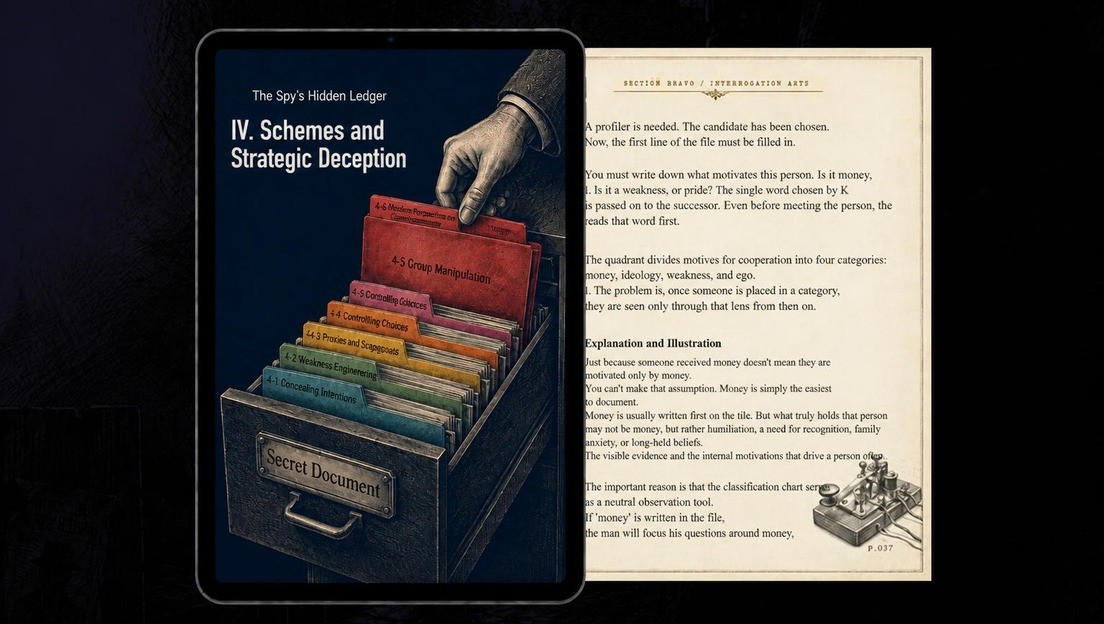
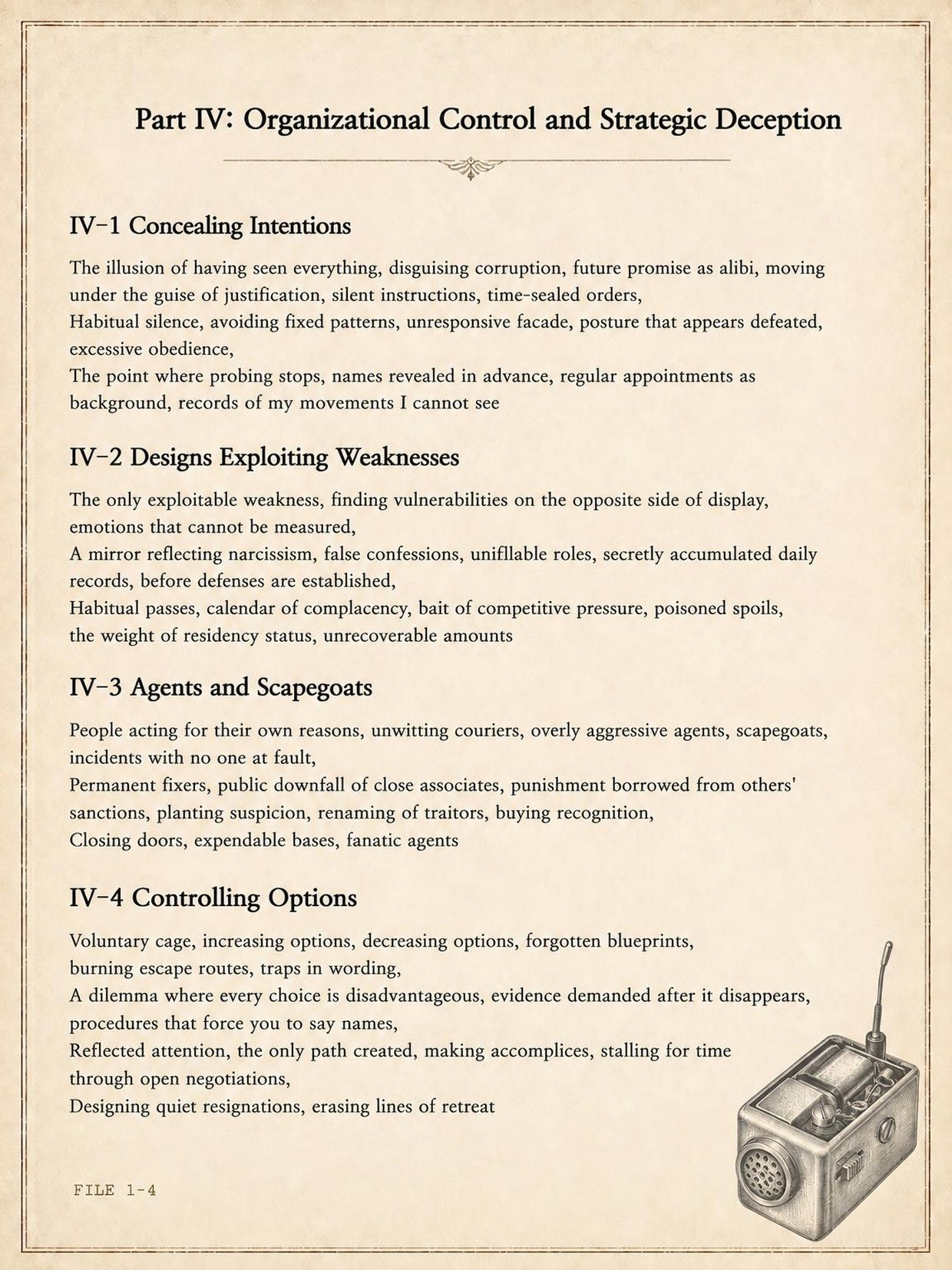
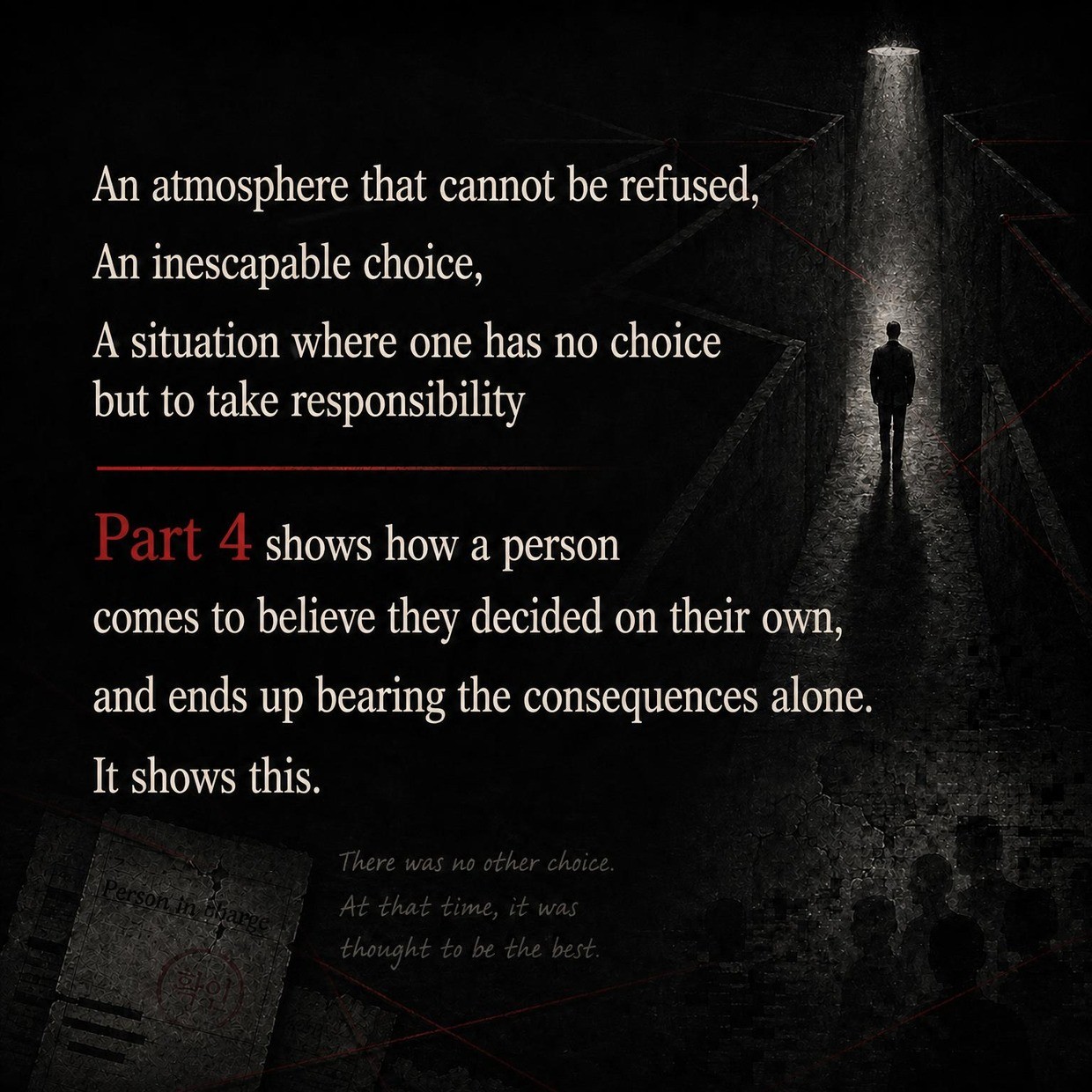
Part IV explores how organizations and groups manipulate people's choices. It examines methods of hiding orders and responsibility, processes of exploiting personal weaknesses, structures that make others act or become scapegoats, and ways that leave only predetermined paths while appearing to offer multiple options. It also covers how rumors, isolation, and group atmosphere are used to push people out.
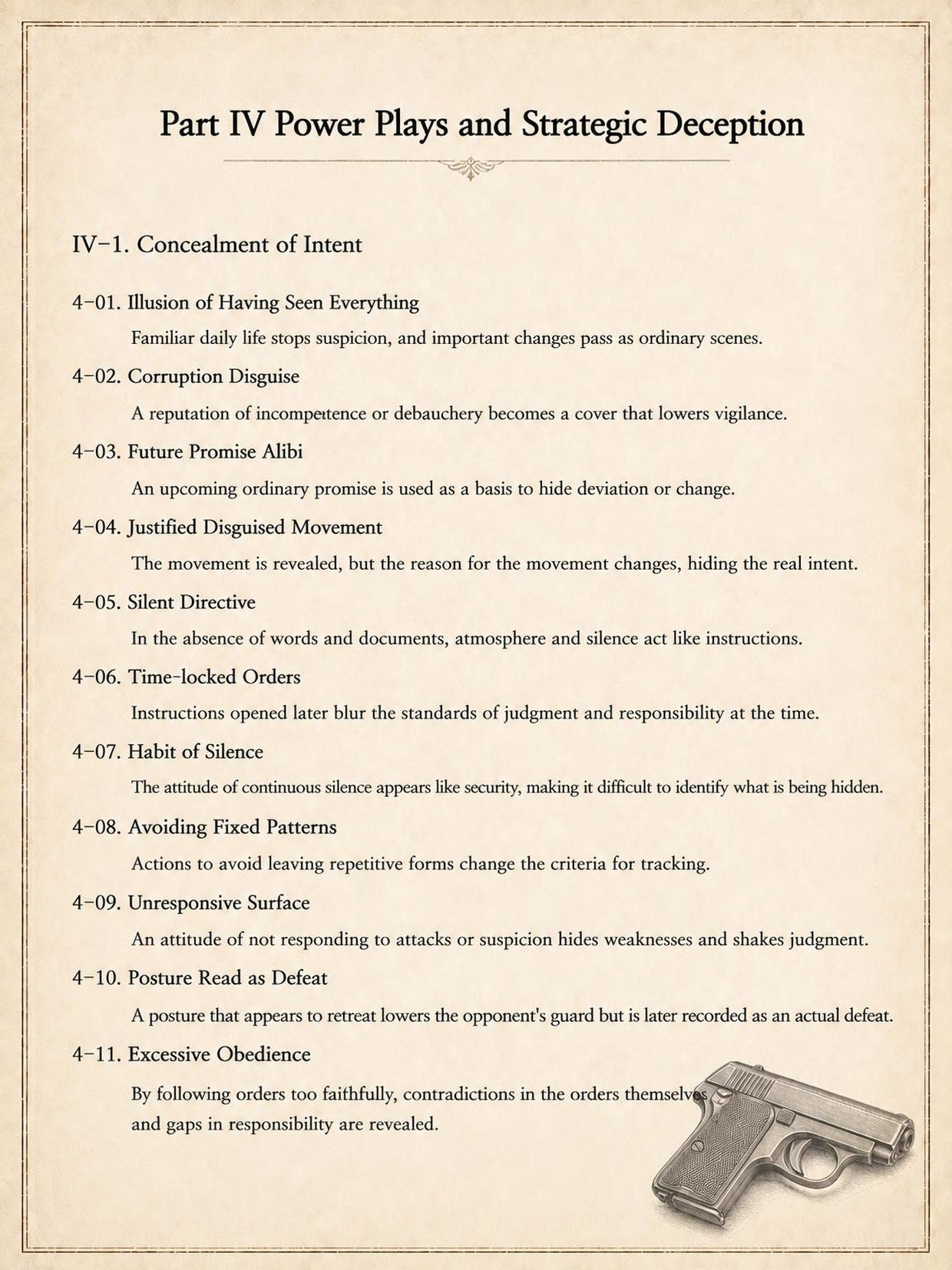
IV-1: Concealing Intentions _ How do orders and responsibility disappear from view?
This section discusses methods of hiding orders within silence, customs, personnel, and assignments without directly stating or recording them, making it difficult to identify who is responsible later.
IV-2: Weakness Engineering _ How do personal deficiencies become tools of control?
This section covers the process of identifying desires for recognition, loneliness, anxiety, grudges, and economic or social weaknesses to influence people's judgments and actions.
IV-3: Agents and Scapegoats _ Who acts and takes responsibility on behalf of others?
This section discusses structures that use others' emotions and motivations to make them act as desired, and shift responsibility to specific individuals when problems arise.
IV-4: Controlling Choices _ How does coercion appear as choice?
It deals with the process of eliminating or disadvantaging each possible path, making the person believe they have chosen the predetermined outcome themselves.
IV-5: Group Manipulation _ How Organizations Isolate and Move People
It covers methods of changing the atmosphere of a group and pushing out or subjugating certain individuals by using rumors, gaps, external threats, and repeated judgments.
IV-6: Modern Adaptations of Classic Schemes _ How Old Tricks Work Today
It discusses how old schemes such as disguise, impersonation, intentional leaks, and fake signals operate in modern organizations, platforms, and digital record environments.
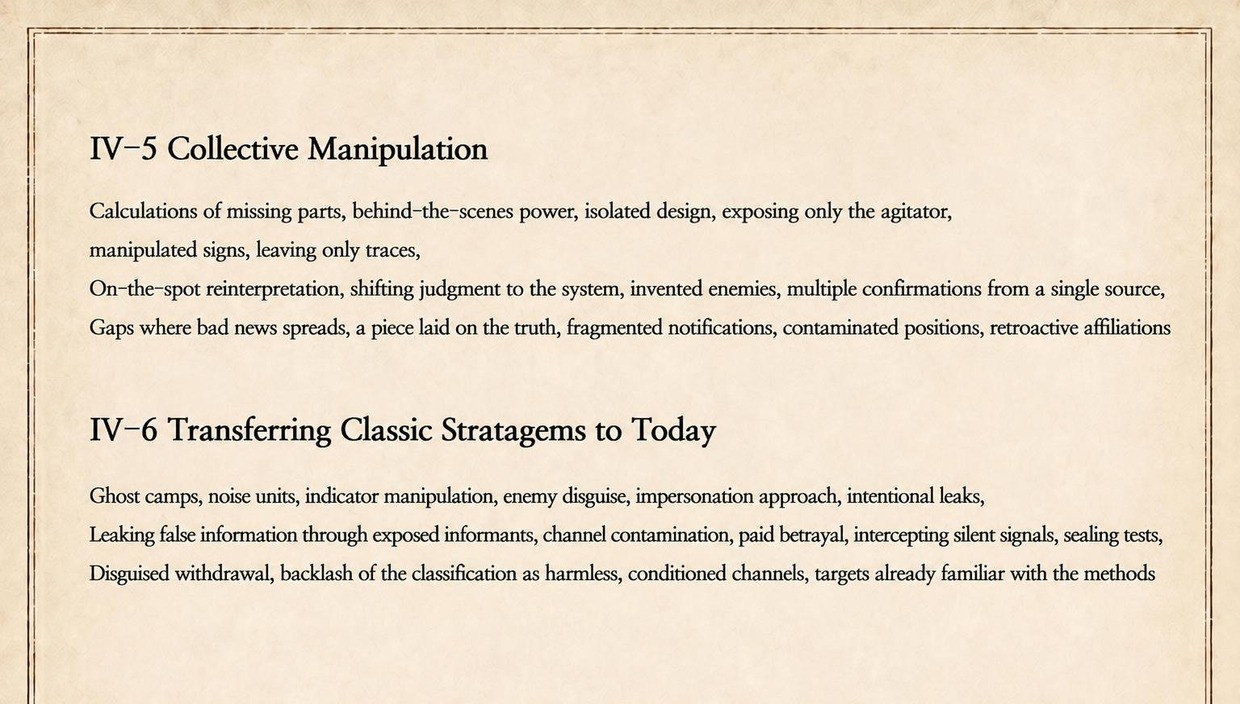
IV The book consists of a total of6 chapters and 88 sections.
The length is about350,000 characters, approximately 450 pages.
[Currently, page design and text editing are being carried out together,
so the final completed version may differ slightly in length.]
This page is for introducing the sections and is not the actual table of contents design.
Actual table of contents design for Part IV is as follows,with sections and brief descriptions included.
4-05-3. Isolation Design
K's Situation
K observes a researcher who raised internal issues at the company gradually becoming isolated.
At first, the researcher is left out of a meeting invitation. Next, access to a shared folder is renewed late. A close colleague moves to another project, and frequent work communications gradually decrease.
Each change comes with a plausible explanation.
They can say that meeting participants were simply adjusted, the delay in renewing access was an administrative issue, and the colleague's move was a matter of personnel reassignment. Taken individually, it is hard to definitively call any of these actions unfair.
The researcher also finds it difficult to raise concerns. They worry that if they keep questioning small matters, they will seem overly sensitive or hard to work with.
...
However, the company can say this:
"No one ever instructed anyone to ostracize that person."
Isolation by design is not about pushing someone out with a single major punishment.It is a process of gradually reducing relationships with colleagues, opportunities to access information, and everyday interactions, eventually leaving the person alone..
One sentence
A method of isolation where small exclusions and disconnections are repeated, so there is no clear incident of ostracism, but at some point, one person is left alone.
Definition
It is not only rules that protect people within a group.
Colleagues who listen, information needed to assess situations, and the daily conversations and greetings exchanged naturally all help protect people. These connections allow individuals to compare their experiences with others to determine whether what they are going through is normal or unfair.
Isolation by design does not cut these connections all at once. It reduces them one by one, as if nothing significant is happening.
...
This is a part of the main text of Part 4.
The book broadly covers the various ways organizations control people,various methods and
how these processes work in a comprehensive manner.
This book is nota manual for recruiting someone ordeceiving others. It does not provide an operational manual for such actions.
It does not replicate the operational procedures of actual agencies.
It does not provide dangerous step-by-step instructions.
It does not sensationalize specific incidents.
This book is not about imitating the techniques of espionage,
but about how espionageaffects people and relationships and the organization,and the hidden costs that remain behind.
Hello. This is Moonjja_Theku, the Maker.
I am a university student majoring in film studies.
Spy novel To write one, I began collecting publicly available trial records from overseas, declassified materials, and documents related to real spy cases.
At first, it was research to make the background of the novel more realistic.
However, the more I read, the more I realized that the world of spies is not just about secret operations or flashy technology,but about human emotions and relationships, and a world entangled with organizational responsibility.
I felt that it could also help people who take on unwanted tasks but cannot refuse, those who are swayed by others' words and moods, those who cannot escape relationships due to weaknesses or guilt, and those who, even after being hurt at work or in personal relationships, wonder, "Am I just being too sensitive?"
"The Spy's Ledger" is a book that borrows the world of espionage to show how people are used and come to believe it was their own choice.
I hope this book can be, for someone, a way to protect themselves, a tool to reread relationships and situations,a small tool for that purpose.
Why I chose Wadiz
This book did not start from a set plan by a major publisher.
To write a spy novel,I collected materials on my own, and while organizing them, I found that inside,A story that we also need. This book began with the thought that such a story exists.
That's why I wanted to meet readers who would recognize the need for this book first.
It starts as a spy story,but ultimately, it is about the human heart and relationships,and responsibility within an organization because this is a book that explores these themes.
Through Wadiz, I want to introduce this book first to those who truly need it, and create the first readers of the book together.